


Why a Weekly Discipline Reset Day Helps You Stay Consistent
Motivation gets you started on a Monday morning. It rarely survives past Wednesday afternoon. A weekly discipline reset day works because it doesn’t rely on motivation at all, it relies on a scheduled checkpoint that reviews what worked, drops what didn’t, and resets your priorities before the next seven days begin.
This single habit closes the gap between wanting to be consistent and actually building the systems that make consistency automatic.
The sections below cover exactly what a reset day looks like, the psychology behind why it works, eight measurable benefits, and a complete step-by-step routine you can start using this week.
What Is a Weekly Discipline Reset Day?

A weekly discipline reset day is a fixed, recurring block of time, usually thirty minutes to an hour, dedicated to reviewing the past week and preparing for the next one. It’s not a full day off from responsibility, it’s a checkpoint that happens on the same day every week, regardless of how the previous seven days went.
This routine typically includes reviewing what you accomplished, identifying what pulled you off track, and setting a small number of clear priorities before Monday arrives. The goal is a weekly reset routine simple enough to actually repeat, not an elaborate ritual you abandon after two tries because it takes too long or feels like extra homework.
The Psychology Behind Weekly Resets
Willpower behaves less like a personality trait and more like a depleting resource across a single day or week. A widely cited 2011 study published in the Proceedings of the National Academy of Sciences examined parole board rulings in Israel and found that judges granted favorable rulings roughly 65% of the time early in a session, a rate that dropped close to zero right before a scheduled break, then reset back to 65% afterward.
That pattern reveals something important about consistency in general. Decision quality degrades with accumulated choices, not with a lack of character or discipline. A weekly discipline reset works the same way the judges’ breaks did, it interrupts the buildup of small decisions and mental clutter before it quietly erodes your follow through on the things that actually matter to you.
This is also why a single motivating Monday rarely carries someone through an entire week. Without a structured reset, the accumulated fatigue of daily choices slowly chips away at the same discipline that felt so solid a few days earlier, until you’re back to square one without fully understanding why.
Signs You Need a Weekly Discipline Reset

Recognizing the pattern early makes it easier to build a fix before frustration sets in and the whole effort feels pointless.
1. You Start Strong but Lose Momentum
Mondays feel productive and full of intention, but by Thursday, the same energy has quietly disappeared without any single dramatic event causing it. This pattern repeats itself week after week, and without a checkpoint to interrupt it, most people just assume they lack discipline before recognizing a structural gap in their routine.
2. Your Habits Feel Inconsistent
Some weeks you exercise four times, other weeks not once, and there’s no clear pattern explaining the difference between a good week and a bad one. Without reviewing what actually changed between those weeks, the inconsistency feels random instead of something you can actually diagnose and fix.
3. You’re Busy but Not Productive
Hours get filled with tasks, yet the important priorities from the start of the week remain untouched by Friday, replaced instead by whatever felt urgent in the moment. This is one of the clearest signals that a reactive schedule has taken over where an intentional one should be.
4. You Keep Restarting Every Monday
Each week feels like beginning from scratch in partiality to building on the last one, which is exhausting in a way that genuine progress never is. If Monday always feels like day one instead of day eight, there’s no system carrying momentum forward between weeks.
5. You Feel Mentally Overwhelmed
Small tasks and decisions pile up in your head rather than on paper, creating a background hum of stress that never fully goes away even during downtime. This mental clutter is often the clearest sign that a structured weekly review is overdue.
8 Benefits of Having a Weekly Discipline Reset Day
1. Improves Habit Consistency

A dedicated weekly discipline reset catches slipping habits before they disappear entirely. According to research from psychologist Phillippa Lally and colleagues at University College London, it takes an average of 66 days for a new behavior to become automatic, with individual results ranging from 18 to 254 days depending on the habit and the person involved.
A weekly checkpoint protects that fragile early period when a habit could easily be abandoned before it has a real chance to stick. Catching a two week slip before it turns into a two month abandonment.
2. Prevents Burnout

Reviewing your week regularly surfaces overcommitment before it compounds into exhaustion. Catching an overloaded schedule on a Sunday reset is far easier to correct than realizing you’re burned out three weeks into an unsustainable pace, when the damage is already harder to reverse and the motivation to fix it has already worn thin.
3. Increases Self-Awareness

A consistent weekly review routine builds a clear pattern of what actually drains your energy and what genuinely moves your goals forward, insight that’s nearly impossible to gather without stepping back regularly. Over several months, this accumulated self-awareness becomes one of the most valuable byproducts of the entire habit.
4. Reduces Decision Fatigue
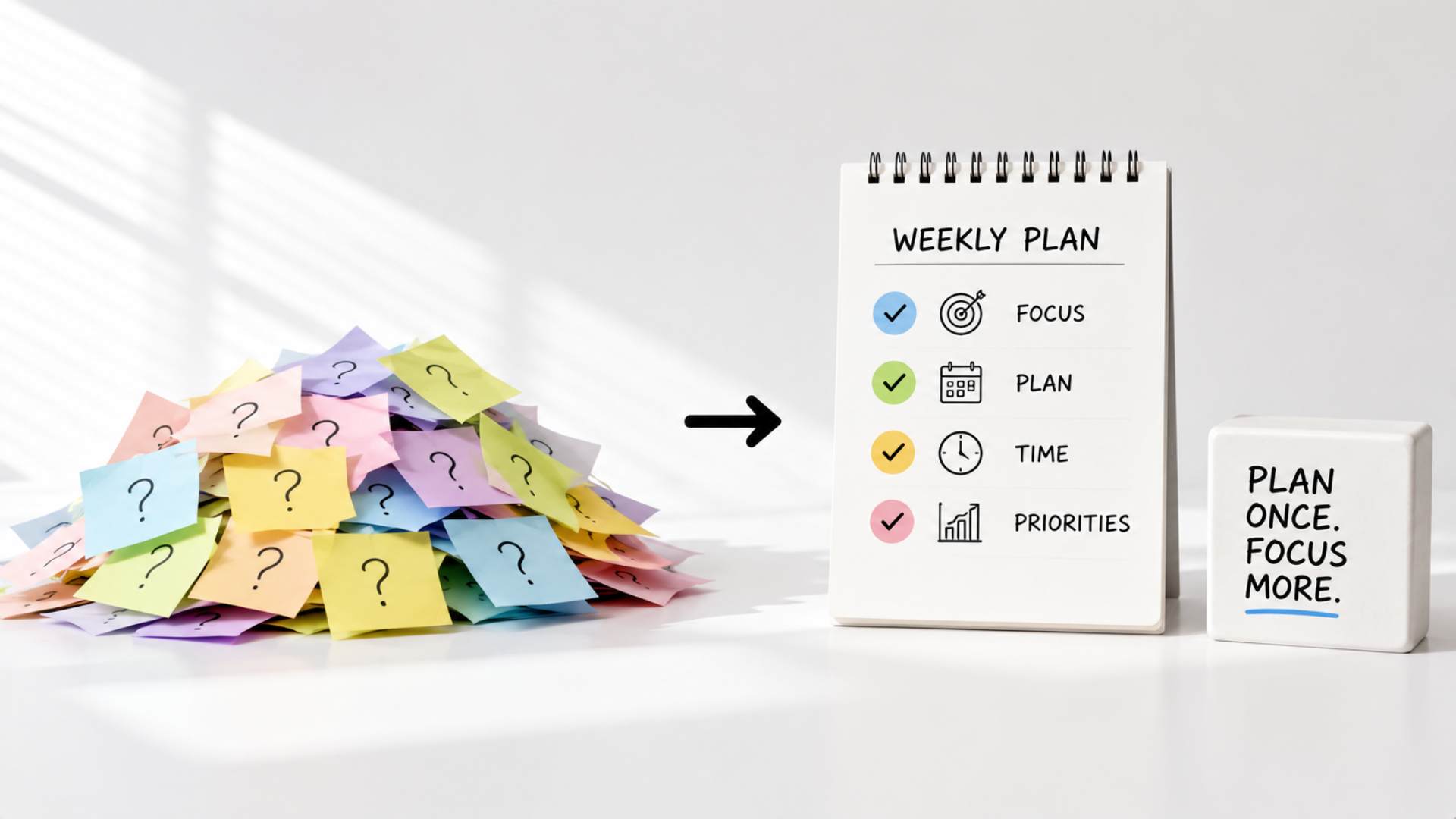
Planning your priorities once a week means fewer in the moment decisions throughout each day. Given the well-documented decline in decision quality that builds up over repeated choices genuinely protects your best thinking for when it matters most.
5. Helps Prioritize What Matters

A reset day forces a hard look at what actually deserves attention next week, rather than defaulting to whatever feels most urgent once Monday’s chaos begins. Without this deliberate step, urgent but unimportant tasks tend to crowd out the priorities that actually move you forward.
6. Builds Confidence Through Small Wins

Deliberately reviewing progress, even modest progress, reinforces momentum. Research from Dr. Gail Matthews at Dominican University found that participants who tracked and reported their weekly progress to another person achieved their goals at a rate of over 70%, compared to just 35% among those who kept their goals private and unwritten. Reviewing your own wins weekly captures a version of that same accountability effect, even without an external partner involved.
7. Keeps Goals Realistic
A weekly checkpoint prevents goals from drifting into unrealistic territory, since you’re recalibrating based on actual performance rather than an ambitious plan made weeks earlier that no longer fits reality. This regular recalibration keeps discouragement from building up around goals that were simply set too high to begin with.
8. Encourages Long-Term Progress
Small, consistent weekly adjustments compound into meaningful change over months, far more reliably than sporadic bursts of motivation followed by long stretches of drift. A weekly discipline reset is ultimately what turns short lived enthusiasm into a system that actually holds up over an entire year.
How to Create Your Weekly Discipline Reset Routine
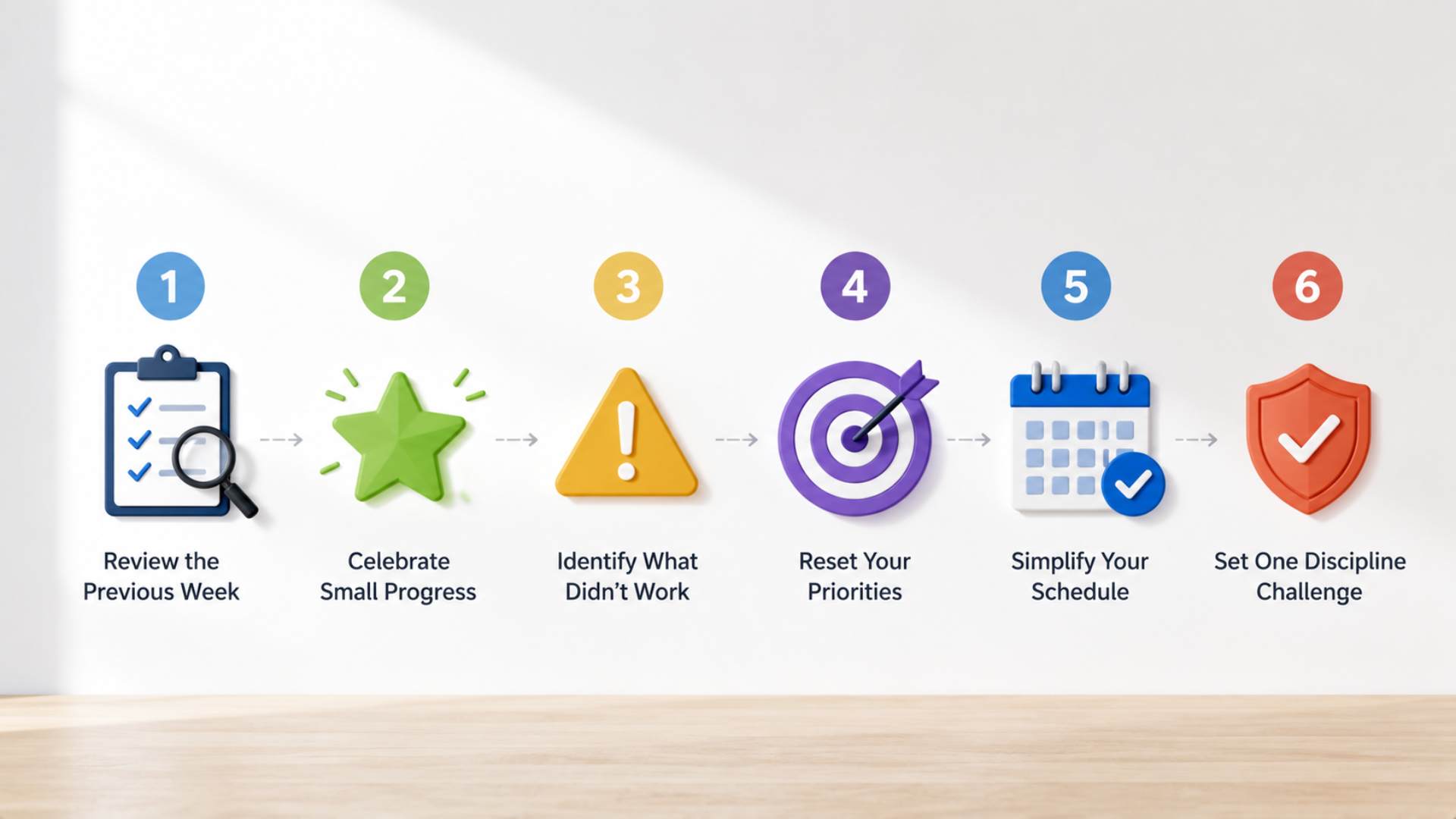
Step 1. Review the Previous Week
Look honestly at what got done, what didn’t, and why. This isn’t about self criticism, it’s about gathering accurate information to work with. Go through your calendar, your habit tracker if you keep one, and any notes from the week to build a clear, factual picture.
Step 2. Celebrate Small Progress
Acknowledge what actually went well, even something as small as a single consistent habit or one difficult conversation handled well. Build Self-Confidence Naturally covers how this kind of regular recognition compounds into genuine self-trust over time, since confidence tends to build from small, repeated evidence.
Step 3. Identify What Didn’t Work
Pinpoint specifically what pulled you off track, whether that’s an overloaded schedule, an unrealistic goal, or a specific recurring distraction like checking your phone first thing in the morning. Being specific here matters far more than a general sense that “this week was hard.”
Step 4. Reset Your Priorities
Choose three priorities for the coming week instead of a long, unrealistic list that guarantees frustration by Wednesday. Morning Routine Ideas for Productivity pairs well here, since a strong morning start often determines whether those priorities actually get tackled before the day’s inevitable distractions take over.
Step 5. Simplify Your Schedule
Remove anything from next week’s calendar that isn’t essential. A lighter schedule protects the mental energy your priorities actually need, and it’s often easier to say no to a nonessential commitment during a calm Sunday reset than in the middle of a busy Tuesday.
Step 6. Set One Discipline Challenge
Pick a single, specific habit to improve in the coming week instead of trying to overhaul everything at once. Build Self Discipline From Scratch covers how starting small and specific consistently outperforms broad, ambitious overhauls that collapse under their own weight within days.
Weekly Discipline Reset Checklist
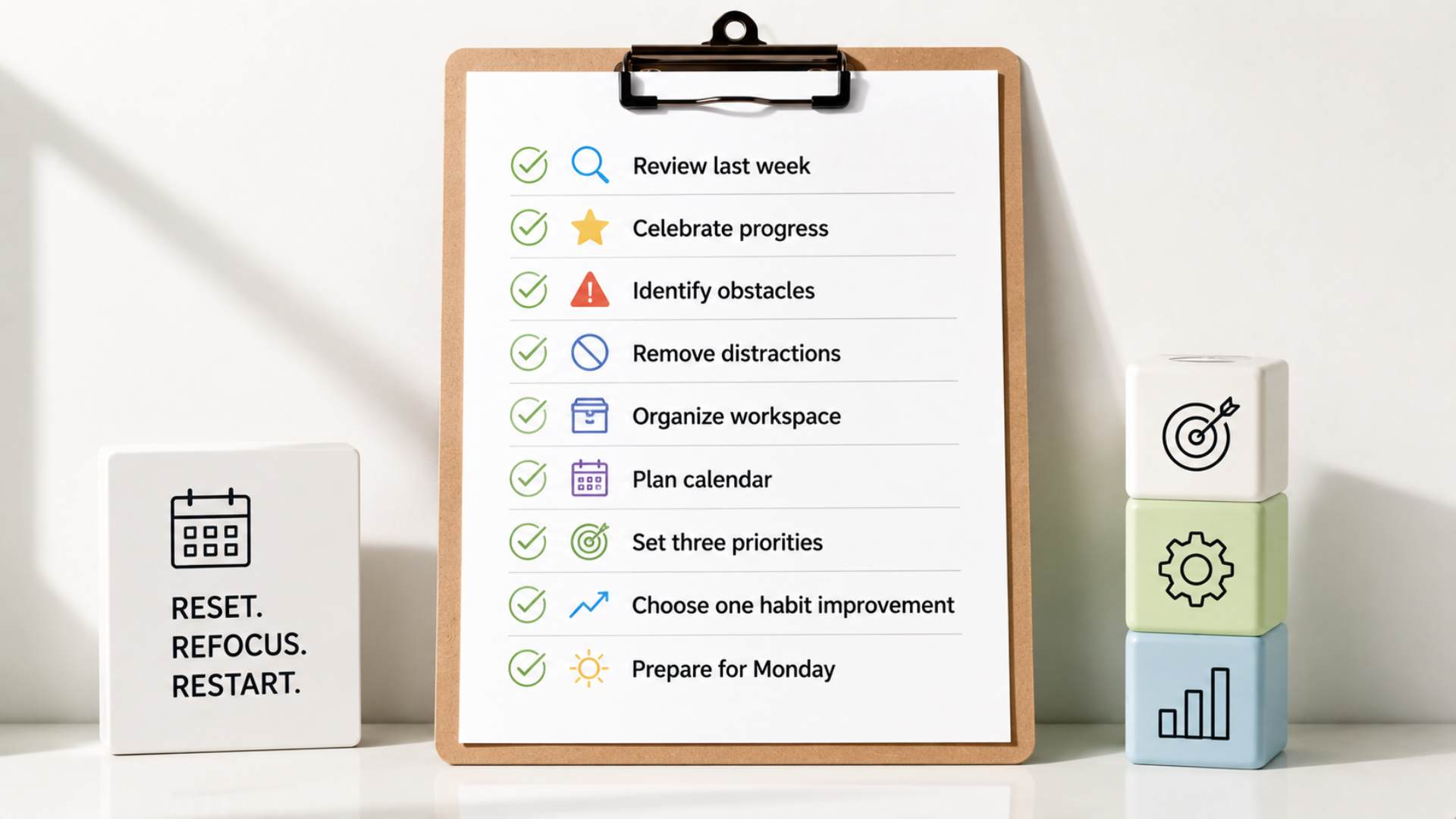
A quick, repeatable checklist keeps the entire process consistent every single week, whether you’re doing this for the first time or the fiftieth:
- ✔ Review last week
- ✔ Celebrate progress
- ✔ Identify obstacles
- ✔ Remove distractions
- ✔ Organize workspace
- ✔ Plan calendar
- ✔ Set three priorities
- ✔ Choose one habit improvement
- ✔ Prepare for Monday
Print this out or save it in a notes app so the routine never depends on remembering every step from memory, especially on weeks when motivation is already running low.
Tools That Make Weekly Discipline Easier
1. Habit Tracker
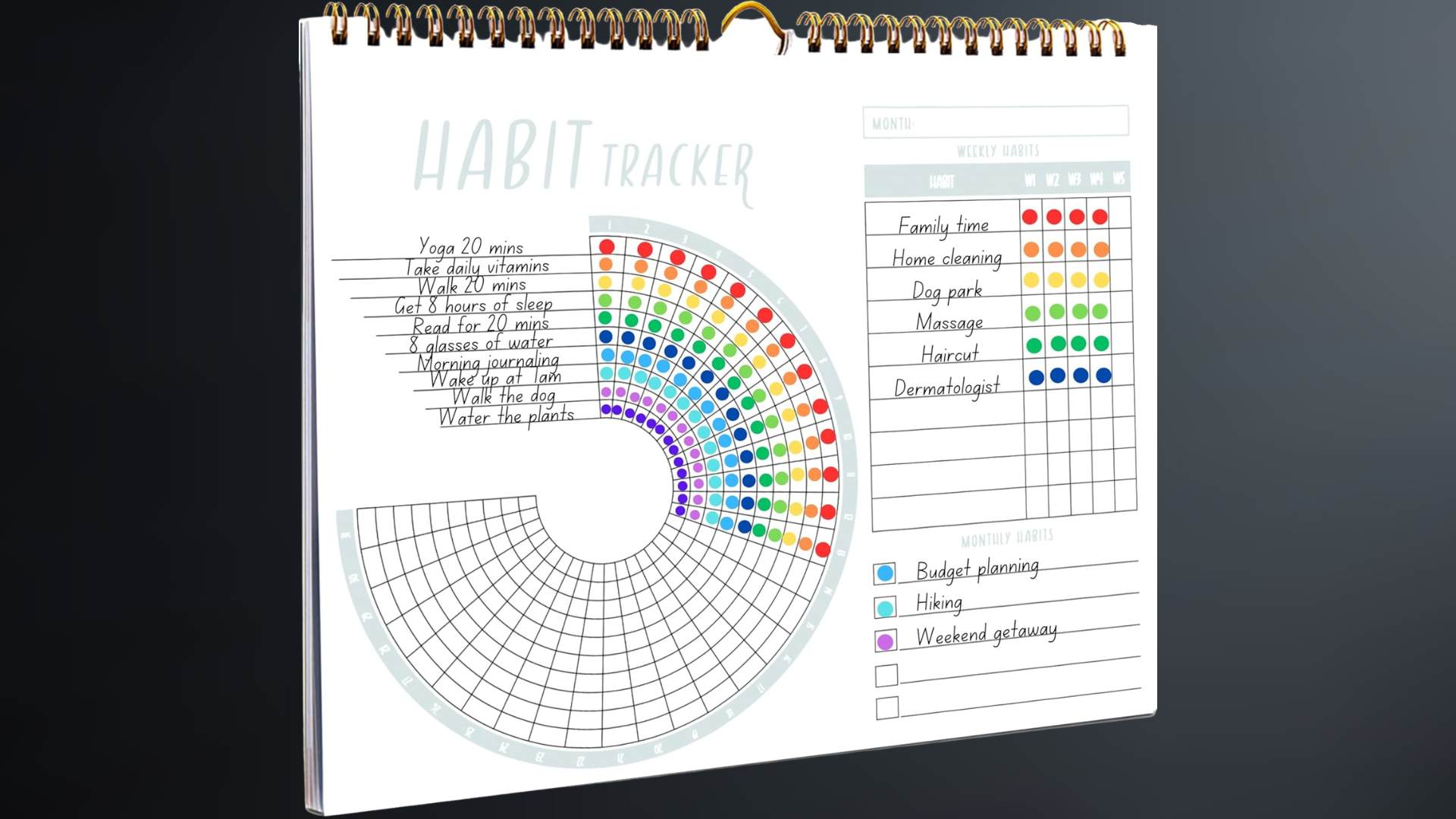
A simple habit tracker, whether an app or a printed grid, gives your weekly discipline reset something concrete to review instead of relying on memory alone, which tends to smooth over inconsistencies you’d otherwise miss.
2. Journal

A short journaling habit alongside your reset captures context behind the numbers, why a week felt hard, what triggered a missed habit, details a tracker alone won’t show you but that matter significantly when diagnosing a recurring pattern.
3. Calendar

Blocking your reset time directly into your calendar as a recurring event protects it the same way you’d protect any other important commitment, rather than leaving it to chance on a busy Sunday.
4. Digital Notes App

A running notes app entry works well for jotting quick thoughts throughout the week that you’ll review during your formal reset, rather than trying to remember everything after the fact when details have already faded.
FAQs
How long should a weekly discipline reset take?
Thirty minutes to an hour is typically enough. Longer sessions tend to lose focus and turn into procrastination themselves, while shorter ones often skip meaningful reflection entirely and become a rushed checklist instead of a genuine reset.
What day is best for a weekly reset?
Sunday evening works well for most people since it sets a clear intention heading into Monday, though any consistent day that fits your schedule is fine, as long as it stays fixed week to week rather than shifting around.
Can a weekly reset replace daily planning?
Not entirely. A weekly reset sets the big picture priorities, while daily planning handles the specific execution of those priorities each day. The two work best together rather than as substitutes for one another.
What should I review every week?
Focus on completed habits, progress toward your top three priorities, and anything that consistently derailed your plans, since these three areas reveal the most actionable patterns without requiring an exhaustive review of every single detail from the week.
Conclusion – A Few Final Words!
A weekly discipline reset day works because it treats consistency as a personality trait you either have or don’t. Reviewing the previous week, celebrating small wins, and resetting priorities before the next one begins protects your habits from the natural decision fatigue that builds up day after day, often without you even noticing it happening.
The research is clear on why this matters. Decision quality declines with accumulated choices, habits take an average of 66 days to solidify, and tracked progress dramatically outperforms good intentions kept private.
Start with just thirty minutes this Sunday. Improve Mental Wellness is worth exploring alongside this routine, since the same weekly structure that builds discipline also supports the kind of steady mental clarity that makes consistency feel sustainable.