


Best Morning Routine Ideas for Productivity – Simple Daily Habits
Have you ever noticed how some people seem to crush their goals effortlessly, while others spend their mornings playing catch-up? The difference usually comes down to the first hour of waking up. According to data from the Harvard Business Review, an incredible 92% of the world’s most productive people refuse to leave their mornings to chance.
So, the best morning routine ideas include waking at a consistent time, hydrating immediately, moving your body, planning your top priorities, and avoiding digital distractions. These productive habits create momentum that carries through your entire day and transforms how much you accomplish.
Your morning sets the foundation for everything that follows. When you design a morning routine for productivity, you take control of your time instead of letting external demands dictate your schedule and energy levels.
“Win the morning, win the day.” — Tim Ferriss
Why Does Your Morning Routine Matter So Much?

Your brain is most alert and focused during the first few hours after waking. This window of peak mental clarity allows you to tackle important tasks before distractions pile up. A structured routine eliminates decision fatigue and creates automatic behaviors that support your goals without requiring constant willpower or motivation.
7 Best Morning Routine Ideas For You
These core components work together to create a foundation for productive habits that last. Each element serves a specific purpose in preparing your mind and body for peak performance throughout the day.
1. Wake Up at the Same Time Daily

Consistency regulates your internal clock and improves sleep quality over time. When you wake at the same hour each day, your body learns to anticipate this pattern and naturally prepares for wakefulness. This biological rhythm supports better focus and sustained energy without relying on excessive caffeine.
Set your alarm for a time that allows at least seven hours of sleep. Place the alarm across the room so you must physically get up to turn it off. This simple action prevents the snooze button trap that ruins your morning momentum and makes you feel groggy.
Your wake time should remain consistent even on weekends to maintain your circadian rhythm. While it feels tempting to sleep late on days off, this disrupts your body’s natural pattern and makes Monday mornings significantly harder.
2. Hydrate Before Anything Else

Your body loses water during sleep through breathing and perspiration. Dehydration affects cognitive function, mood, and physical performance before you even notice thirst. Drink at least 16 ounces of water within the first 15 minutes of waking to jumpstart your metabolism and flush out toxins.
Keep a large glass of water on your nightstand so hydration becomes your first action. This habit supports better morning routine practices by preparing your brain for the day ahead. Many people mistake dehydration for hunger or fatigue and reach for coffee or food when their body simply needs water.
Add lemon to your water for extra vitamin C and digestive support. This small enhancement provides an energy boost without any complicated preparation or expensive supplements.
3. Move Your Body for Energy

Physical activity releases endorphins that naturally elevate mood and increase alertness. You don’t need an intense workout to experience these benefits. A 10-minute walk, gentle yoga, or basic stretches activate your muscles and improve circulation to your brain.
Exercise in the morning also helps you build self discipline by proving you can do hard things before your day gets busy. This psychological win creates positive momentum that influences your choices throughout the day. When you complete physical movement early, you’re more likely to make other healthy decisions later.
Choose activities you genuinely enjoy rather than force yourself through exercises you hate. Dancing to your favorite songs, shadow boxing, or simple bodyweight exercises all count as movement. The goal is to wake up your body and get blood flowing to support healthy morning routine habits.
Quick Morning Movement Options
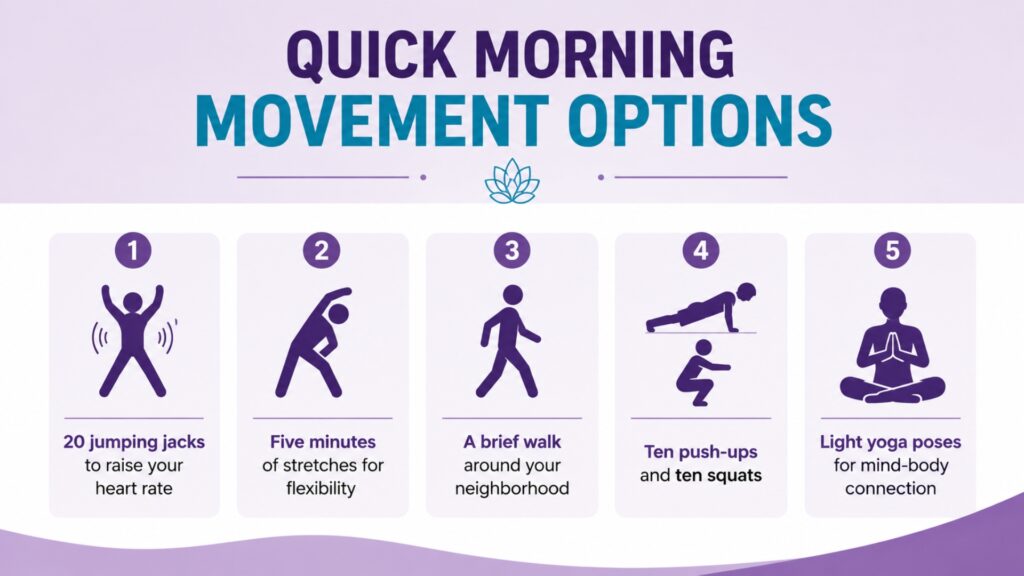
- 20 jumping jacks to raise your heart rate
- Five minutes of stretches for flexibility
- A brief walk around your neighborhood
- Ten push-ups and ten squats
- Light yoga poses for mind-body connection
4. Plan Your Top Three Priorities

Productive people know exactly what needs their attention before the day begins. Take five minutes to identify your three most important tasks for the day. These should be activities that move you closer to your significant goals rather than busy work that simply fills time.
As productivity expert Brian Tracy famously said:
“Eat that frog.”
Write these priorities on paper or in a digital planner where you can see them clearly. This practice provides better focus because your brain stops trying to remember everything and can concentrate on execution instead. When distractions arise throughout the day, your written priorities serve as an anchor that pulls you back to what truly matters.
Limit yourself to three items because more than that creates overwhelm and dilutes your attention. You can always add more tasks after completing your top three, but starting with a manageable list ensures you make real progress on important work.
5. Avoid Your Phone for the First Hour

Digital devices flood your brain with information and other people’s priorities before you’ve even defined your own. Social media, emails, and news notifications trigger stress responses and fragment your attention. This morning routine for productivity protects your mental space during your most valuable hours.
Successful morning habits include keeping your phone in another room overnight so you’re not tempted to check it immediately upon waking. Use a traditional alarm clock instead of your phone to eliminate this excuse. The first hour of your day belongs to you and your goals, not to advertisers or other people’s demands.
Replace phone time with activities that energize you like reading, journaling, or quiet reflection. These practices support positive mindset development and prepare you mentally for challenges ahead. When you finally do check your phone, you’ll approach messages from a grounded place rather than a reactive state.
6. Practice Gratitude or Journaling

Mental clarity comes from processing your thoughts rather than letting them swirl chaotically. Spend five minutes writing about what you appreciate or what’s on your mind. This simple practice reduces anxiety and creates emotional space for goal setting and clear thinking.
Gratitude specifically rewires your brain to notice positive aspects of life rather than fixate on problems. Write three specific things you feel thankful for each morning. This habit supports morning self care routine by acknowledging good things before stress enters your day.
Journaling also helps you track patterns in your thoughts and behaviors over time. You might notice that certain activities drain your energy or that specific triggers affect your mood. This self-awareness allows you to make better choices and design a morning routine for productivity that fits your unique needs.
7. Review Your Goals Briefly

Successful people stay connected to their long-term vision through daily review. Spend two minutes reading your written goals or visualizing your desired outcomes. This practice keeps your bigger purpose front and center so daily tasks feel meaningful rather than random.
When you build self-confidence naturally through goal achievement, you create a positive cycle of motivation and action. Your morning review reminds you why you’re putting in effort and helps you prioritize tasks that align with your values.
Motivational speaker Zig Ziglar once said:
“People often say motivation doesn’t last. Well, neither does bathing. That’s why we recommend it daily.”
Keep your goals visible in your morning space so you see them naturally. A vision board, written statement, or digital reminder all work well. The key is consistent exposure to your aspirations so they guide your daily morning routine ideas and choices.
Frequently Asked Questions
What time should I wake up for a productive morning routine?
Wake at a time that allows seven to eight hours of sleep and gives you at least one hour before work or obligations begin. Most productive people wake between 5:00 and 6:30 AM, but your ideal time depends on your sleep needs and schedule.
How long does it take to build a morning routine for productivity?
Most people need 21 to 30 days of consistent practice before a routine feels automatic. Start with just one or two habits rather than overhaul everything at once. Add new elements gradually as earlier habits become effortless to maintain your momentum.
Can I have a productive morning routine if I’m not a morning person?
Yes. Your chronotype influences your natural energy patterns but you can still create effective routines. Night owls should focus on quality sleep first, then build gentle morning practices that ease them into the day.
Wrapping Up….
All in all, these best morning routine ideas provide a practical framework to transform your productivity through simple daily actions. The key elements include waking consistently, hydrating immediately, moving your body, planning priorities, avoiding digital distractions, eating protein, practicing gratitude, and reviewing your goals. Each component supports the others to create a morning routine for productivity that energizes your day. Start with one or two habits that resonate most and build from there. Remember that small consistent actions compound into remarkable results when you commit to the process with patience and self-compassion.