


A Weekly Money Check-In Routine Anyone Can Follow
Most people don’t have a spending problem. They have an awareness problem, and it shows up every time a credit card statement arrives with a number that doesn’t match what they remember spending. That gap between memory and reality is exactly what a weekly money check-in fixes.
This routine takes about fifteen to twenty minutes and covers seven simple steps: setting a consistent day, reviewing income, checking recent spending, looking ahead at bills, updating savings goals, adjusting your budget, and celebrating small wins along the way. None of it requires spreadsheets or financial expertise.
By the end of this guide, you’ll have a repeatable system that keeps your money organized every single week, without the overwhelm that usually comes with traditional budgeting.
Why Weekly Check-Ins Matter

A monthly budget review sounds reasonable until you realize how much can go wrong in thirty days without anyone noticing. Small purchases pile up, a forgotten subscription renews, and by the time the month ends, there’s very little you can actually do to change what already happened.
A weekly money check in catches problems while they’re still small and fixable. You see an overspend after one week instead of four, which gives you three more chances to course correct before the month is over.
This shorter feedback loop is also why the habit sticks better than monthly reviews. Fifteen minutes a week feels manageable in a way that a two hour monthly deep dive never quite does, and consistency is what actually builds financial habits that last.
Finest Weekly Money Check-In Routine to Follow
1. Set a Weekly Money Date

Pick the same day and time each week so this becomes automatic rather than something you have to remember to schedule. Sunday evening works well for a lot of people since it sets the tone heading into a new week, but any consistent day works fine.
A few things that make this stick:
- Pick the same day each week, ideally one that’s rarely disrupted by plans
- Choose a quiet place where you can actually focus for fifteen minutes
- Keep distractions away, phone on silent, TV off
- Make it part of your existing routine, like right after dinner or during your morning coffee
Treat this like an actual appointment with yourself. Skipping it “just this once” is how the habit quietly disappears within a month.
2. Review Your Income

Start each check in by confirming what actually came in during the past week. This only takes a minute or two but keeps your numbers grounded in reality rather than assumption.
Look at:
- Paychecks that hit your account
- Side income from any part time work
- Freelance payments received
- Passive income like interest or dividends
- Expected deposits still coming later in the week
Knowing exactly what’s coming in gives every other step in this routine something solid to work from.
3. Check Recent Spending

This is the core of your weekly money check in. Pull up your bank and card transactions from the past seven days and scan through them by category.
Categories worth reviewing each week:
- Groceries
- Dining out
- Transportation
- Shopping
- Entertainment
- Utilities
- Miscellaneous
Reviewing spending weekly instead of monthly means patterns show up while they’re still small. Three coffee runs and two takeout orders in one week is a manageable pattern to notice and adjust. The same pattern repeated for a full month before you catch it is a much bigger fix.
4. Review Upcoming Bills
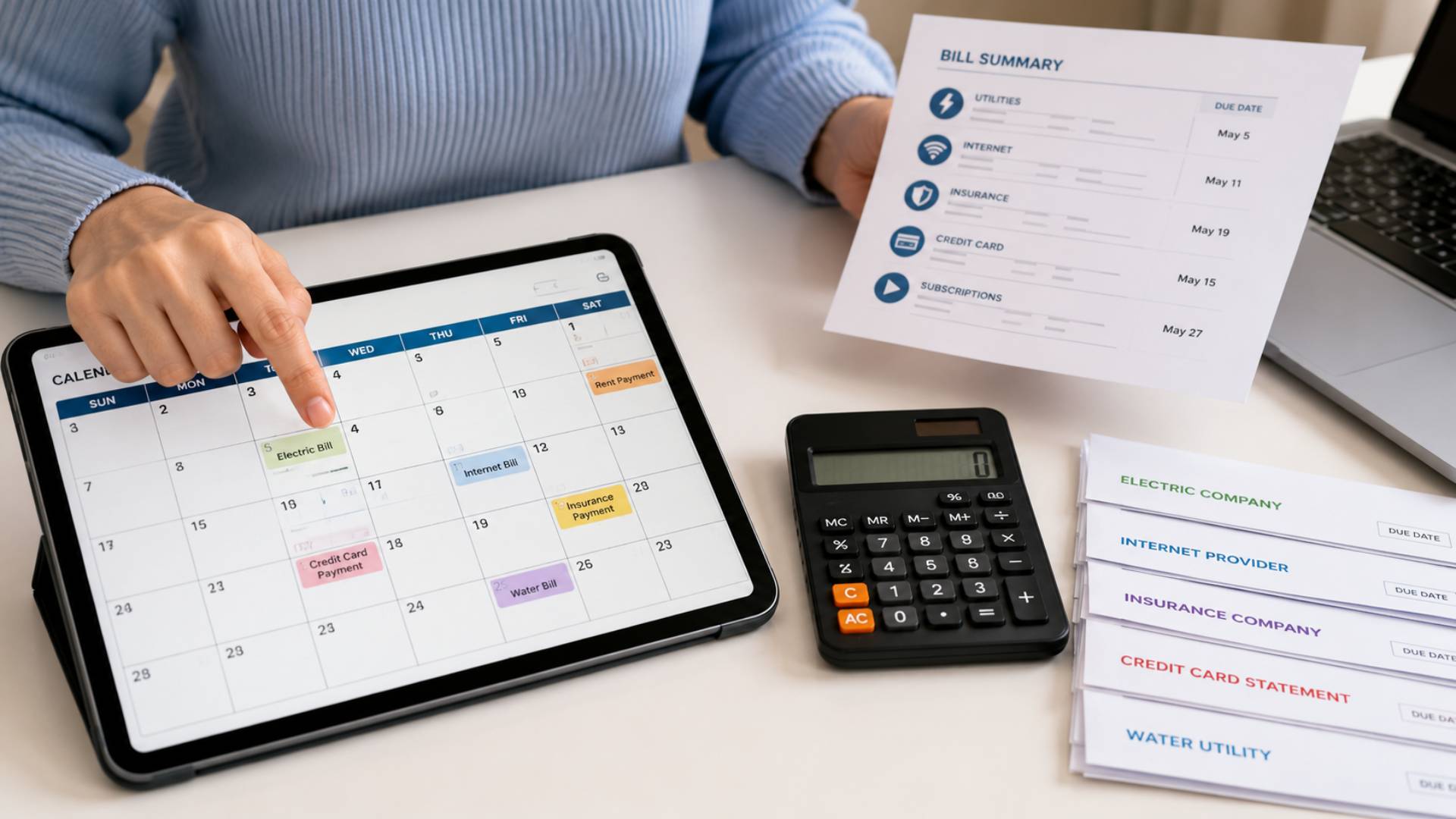
Look ahead at what’s due in the next seven to ten days so nothing catches you off guard. This step alone prevents the majority of late fees and overdrafts that happen simply because a bill slipped someone’s mind.
Check for:
- Due dates on any bills coming up
- Automatic payments scheduled to process
- Subscription renewals that might sneak through
- Credit card payments and their minimum due dates
- Utility bills that fluctuate seasonally
50 Things to Stop Buying to Save Money is worth a look here too, since a lot of forgotten subscriptions and small recurring charges hiding in this step are exactly the kind of spending that list helps you catch and cancel.
5. Update Your Savings Goals

Take a quick look at how your savings are progressing and adjust your contributions if needed. This keeps your goals visible instead of something you set once and forget about.
Common goals worth tracking weekly:
- Emergency fund
- Vacation savings
- Home down payment
- Holiday spending
- Large purchases you’re saving toward
Seeing these numbers move, even slightly, every single week keeps motivation high in a way that a once a year check in never does.
6. Adjust Your Budget if Needed

If this week ran over in one category, decide right now how you’ll balance it out rather than letting it slide into next week unaddressed. Maybe dining out gets a smaller allocation next week to make up for an overspend, or maybe the overspend was justified and the budget itself needs a small permanent adjustment.
This step is what separates a weekly money check in from just passively watching your numbers. Small, immediate adjustments prevent the kind of accumulated damage that makes monthly budgets feel so discouraging.
7. Celebrate Small Wins

Acknowledge what went well before closing out the session. Stayed under budget in one category. Hit a savings milestone. Avoided an impulse purchase you would have made a month ago. These wins matter, and skipping this step is why a lot of people burn out on budgeting entirely.
Financial habits that last are built on positive reinforcement just as much as correction. According to research published by the American Psychology Assosiation, tracking small progress toward a goal significantly increases the likelihood of sticking with that goal long term.
Budget Binders Worth Buying
Paper systems still work well for people who want to track expenses without staring at another app. Here are three worth considering.
1. SKYDUE Budget Planner – Cash Envelopes
- A zippered cash envelope binder that makes overspending obvious at a glance.
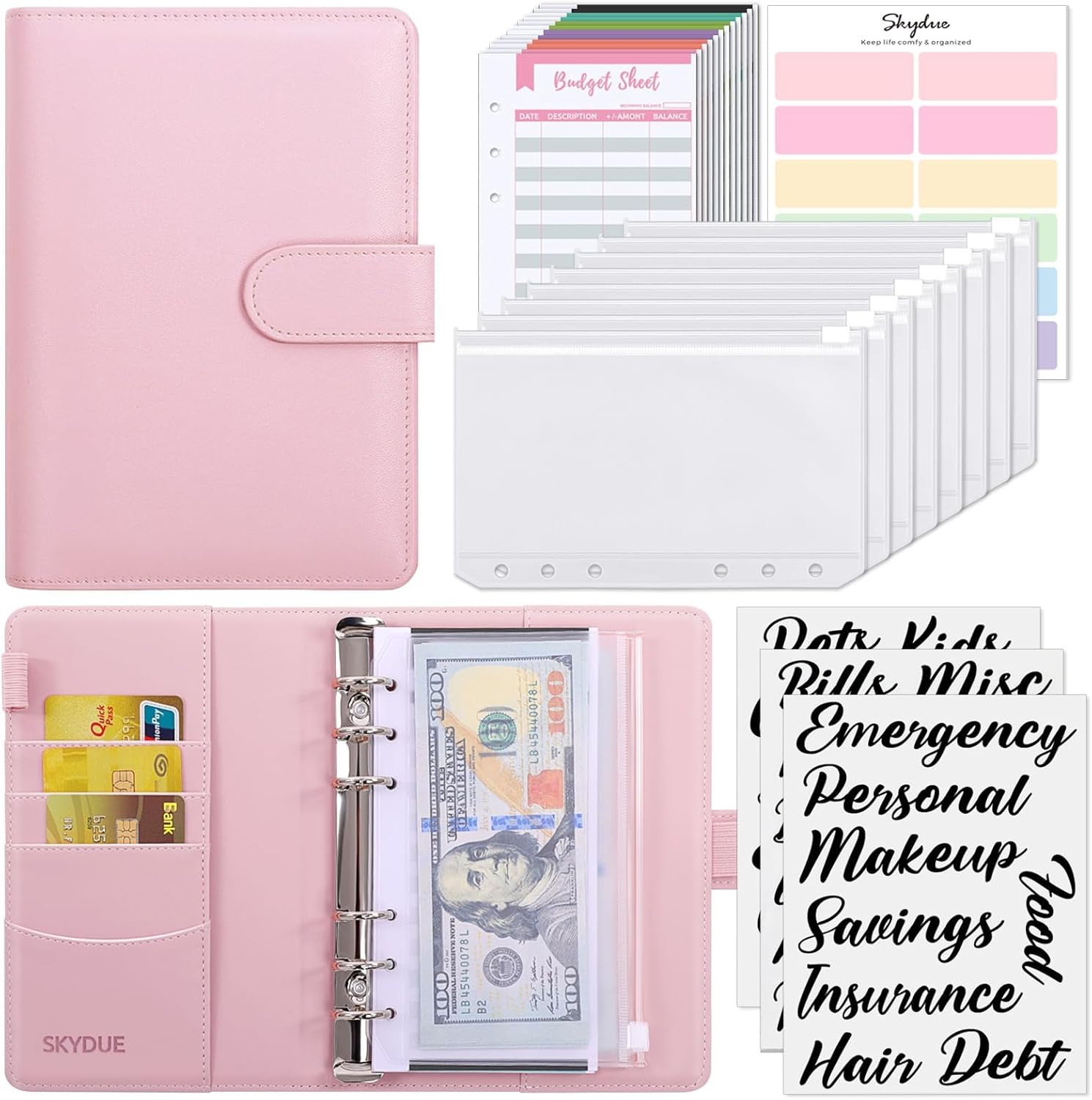
If you’re someone who thinks better with cash in hand rather than numbers on a screen, SKYDUE budget planner makes the whole weekly check in feel more tangible. The PU leather cover holds up well to weekly handling, and the eight zippered cash envelopes let you physically separate money by category, groceries, dining out, entertainment, whatever fits your routine. The included expense sheets and sticker labels mean you’re not scrambling to improvise a system on day one.
What makes this one worth considering over a plain envelope stack is how compact it stays. Everything fits into one A6 sized binder that slides into a bag or desk drawer without taking up much space, which matters if your weekly check in happens somewhere other than a home office.
Specs Overview
- PU leather
- A6 binder with a 6-ring closure system
- Tear-resistant cash envelopes
2. Taj Budget Planner – Undated Monthly Tracker
- An undated planner that combines a monthly budget with a built in bill organizer.
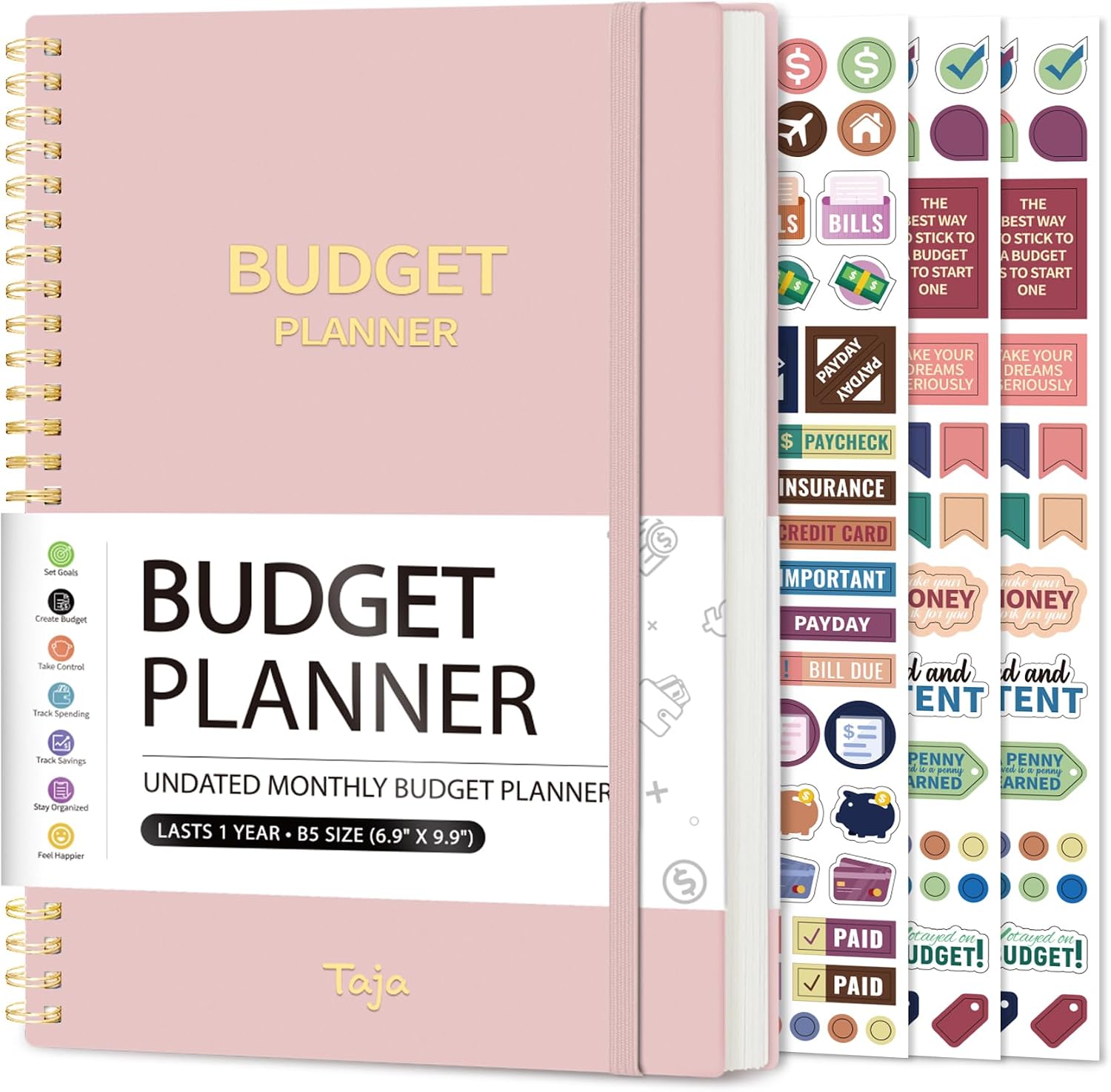
If a binder feels like more system than you need, this Taj Budget Planner strips things down to a simple notebook format that you can start using the same day you receive it, no dates to align with, no month you’re locked into. The undated layout means you can begin your weekly money check-in routine in the middle of March just as easily as January, which removes the common excuse of waiting for “the right time” to start budgeting.
Inside, you get dedicated sections for income, fixed expenses, savings goals, and a monthly calendar for marking paydays and bill due dates. The layout is intuitive enough that you’re not flipping back to an instructions page every week trying to remember which section covers what. For anyone who wants a straightforward paper system without cash envelopes attached, this is a solid, no fuss option.
Specs Overview
- Undated monthly and yearly layout.
- Dedicated sections for income tracking.
- Compact 5.8 by 8.2 inch size that fits easily into a bag or drawer.
3. Sooez Budget Binder – Money Saving Challenge
- Cash envelopes paired with a savings challenge tracker for anyone chasing a specific goal.
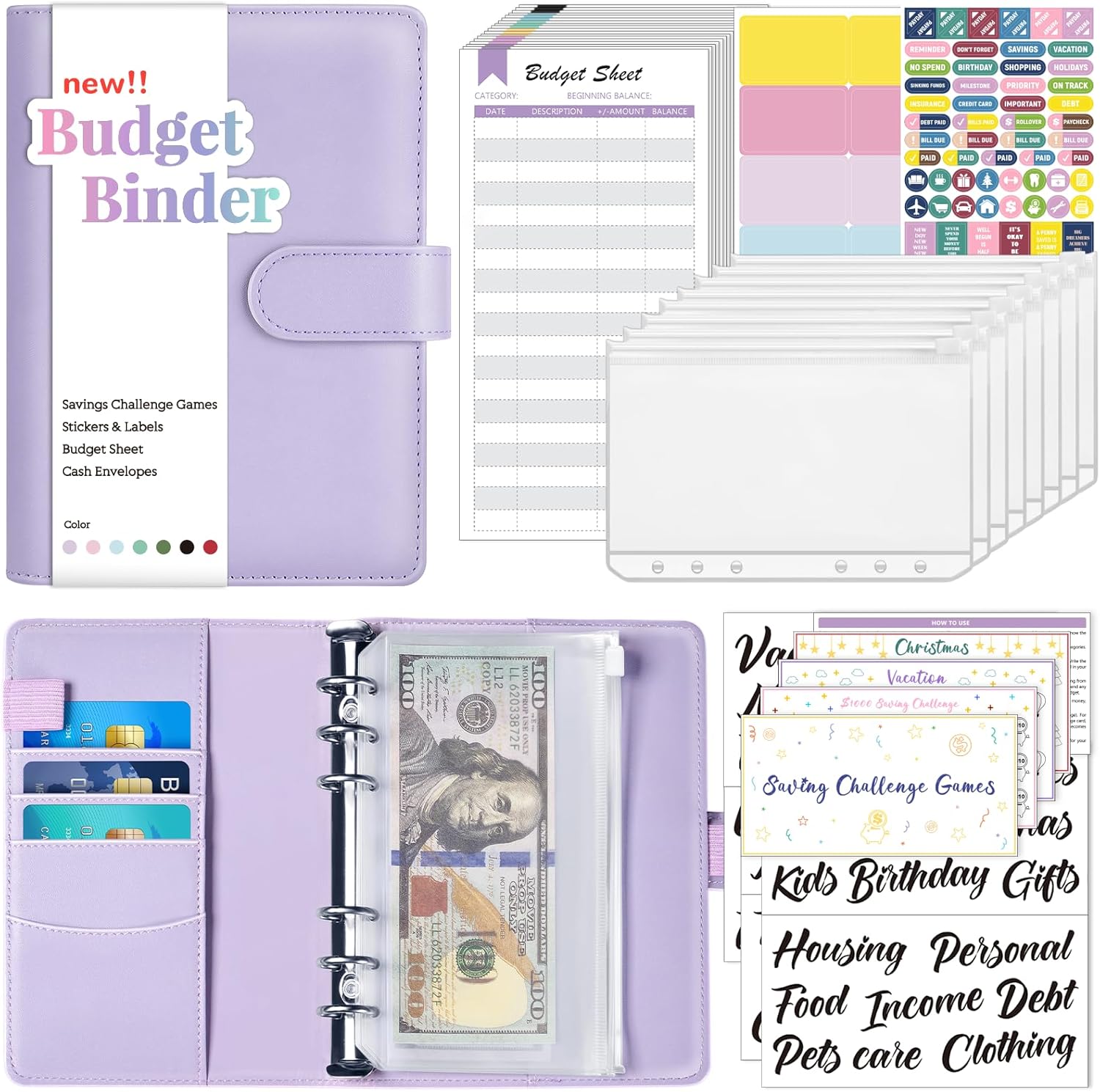
Honestly speaking, the Sooez budget binder is built for people who respond better to a game than a spreadsheet. Alongside the standard cash envelopes and expense sheets, it includes challenge tracker cards that turn your weekly money check-in into something closer to a savings game, marking off numbers as you hit small milestones toward a bigger goal.
If motivation is usually your weak spot rather than the math itself, this small addition makes a real difference. The binder holds up well for weekly handling, and the category labels are large enough to read at a glance, which matters when you’re sorting cash quickly during a fifteen minute session rather than studying tiny text.
It’s a slightly more playful take on the same cash envelope concept, and for some people that playfulness is exactly what keeps the habit going past the first month.
Specs Overview
- A6 PU leather binder with 8 cash envelopes.
- Challenge tracker cards.
- Easy-to-read category labels for quick sorting.
FAQs
How long should a weekly money check in take?
Most people finish in fifteen to twenty minutes once the routine becomes familiar. The first few sessions might run a bit longer while you’re setting up categories and getting comfortable with the process.
Is weekly budgeting better than monthly budgeting?
Weekly check ins catch problems faster and feel less overwhelming than a single large monthly session. That said, many people find success combining both, a quick weekly check in alongside a more detailed monthly budget review.
What if I miss a week?
Just pick back up the following week without trying to reconstruct the missed one in detail. Getting back to the routine matters far more than perfectly accounting for a skipped week.
Conclusion – A Few Final Words!
A weekly money check in turns financial awareness from an occasional stressful event into a simple, repeatable habit. Setting a consistent day, reviewing income and spending, checking upcoming bills, and adjusting your budget in real time keeps small problems from turning into bigger ones.
The seven steps covered here take under twenty minutes but create a level of financial clarity that most people never get from an annual budget review. Add in a simple tool like a cash envelope system, and the whole process becomes even easier to stick with.
If you’re also working on paying down debt or building better financial habits overall, Pay Off Debt Fast on a Low Income and 10 Wealth Building Mistakes That Keep People Broke both pair naturally with this routine. Fifteen minutes a week is a small price for the kind of control it gives you over your money.
Purchases made through our links may earn us a small commission.