


How to Do a Personal Expense Audit in Under an Hour – A Complete Guide!
Most people avoid looking closely at their spending because it feels overwhelming or, honestly, a little embarrassing. But the truth is simpler than that dread suggests. A personal expense audit doesn’t require hours of spreadsheet work or a finance degree.
With your bank statements pulled up and about an hour of focused time, you can get a complete, honest picture of where your money actually goes. This guide walks through exactly how to do that, step by step.
What Is a Personal Expense Audit?
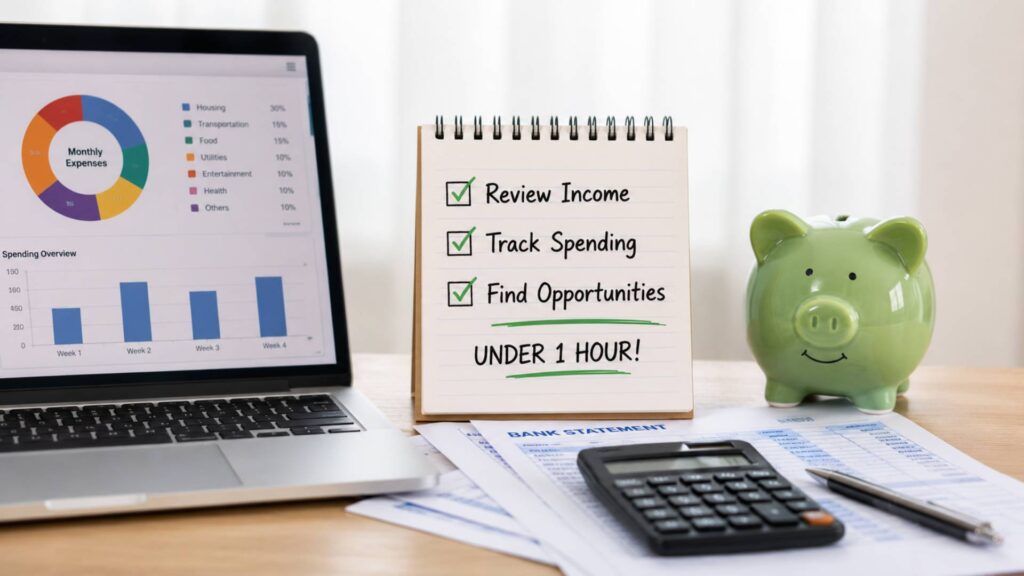
A personal expense audit is a quick, focused review of your income and spending over the past month. Instead of guessing where your money went, you pull actual numbers from your bank statements and categorize them. It’s not the same as building a full budget. It’s a snapshot that shows you patterns, waste, and opportunities, all in under an hour.
Step-By-Step Guide To Personal Expense Audit
Step 1. Review Monthly Income

Before looking at spending, get a clear number for what’s actually coming in. This step takes about five minutes and sets the foundation for everything else.
Pull together these income sources:
- Your regular salary or hourly wages after taxes.
- Any side income from freelance work or a side hustle.
- Passive income like dividends, rental income, or interest.
- An average monthly total if your income fluctuates month to month.
If your income varies, use your lowest earning month from the past six months as your baseline. This keeps your expense audit grounded in reality rather than an optimistic average that might not hold up during a slower month.
Step 2. List Every Expense
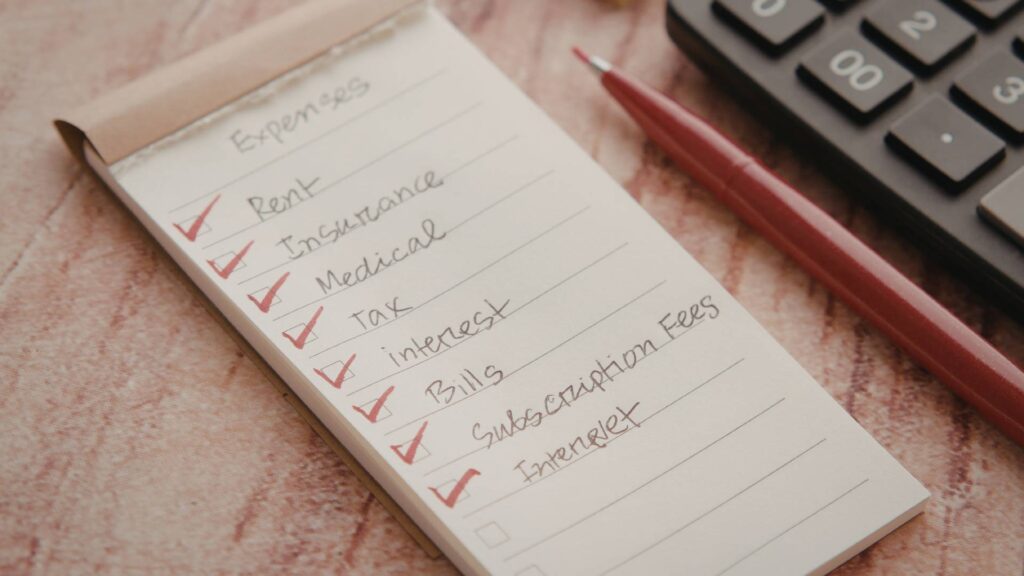
This is the core of your personal expense audit, and it takes the bulk of your hour. Open your bank and credit card statements from the past thirty days and start sorting every transaction into categories.
Common categories to track:
- Housing, including rent or mortgage.
- Utilities like electricity, water, and internet.
- Groceries.
- Transportation, gas, transit, or car payments.
- Insurance, health, auto, or renters.
- Entertainment and streaming services.
- Dining out and takeout.
- Shopping, clothing, and general purchases.
- Miscellaneous, anything that doesn’t fit elsewhere.
Don’t worry about perfect precision here. Round to the nearest dollar and move quickly. The goal is a clear picture, not an accountant’s ledger.
Step 3. Spot Unnecessary Spending

Once everything is categorized, patterns start jumping out fast. This step is where most people find real, immediate savings without cutting anything that actually improves their life.
Look specifically for:
- Unused subscriptions you forgot you signed up for.
- Duplicate services, like two streaming platforms with overlapping content.
- Impulse purchases that don’t fit any planned category.
- Frequent takeout orders that add up faster than they feel like they should.
- Convenience fees from delivery apps, ATM withdrawals, or rush shipping.
Most people find at least one or two recurring charges they completely forgot about. Canceling those alone often covers a meaningful chunk of monthly savings without any real sacrifice.
Step 4. Separate Needs From Wants

Go back through your expense list and mark each item as either a need or a want. Housing, groceries, insurance, and transportation are needs. Streaming services, dining out, and discretionary shopping are wants.
This isn’t about eliminating every want from your life. It’s about seeing the ratio clearly. If wants are eating up a much larger share of your income than expected, that’s valuable information you can act on immediately.
Step 5. Create Small Money Goals
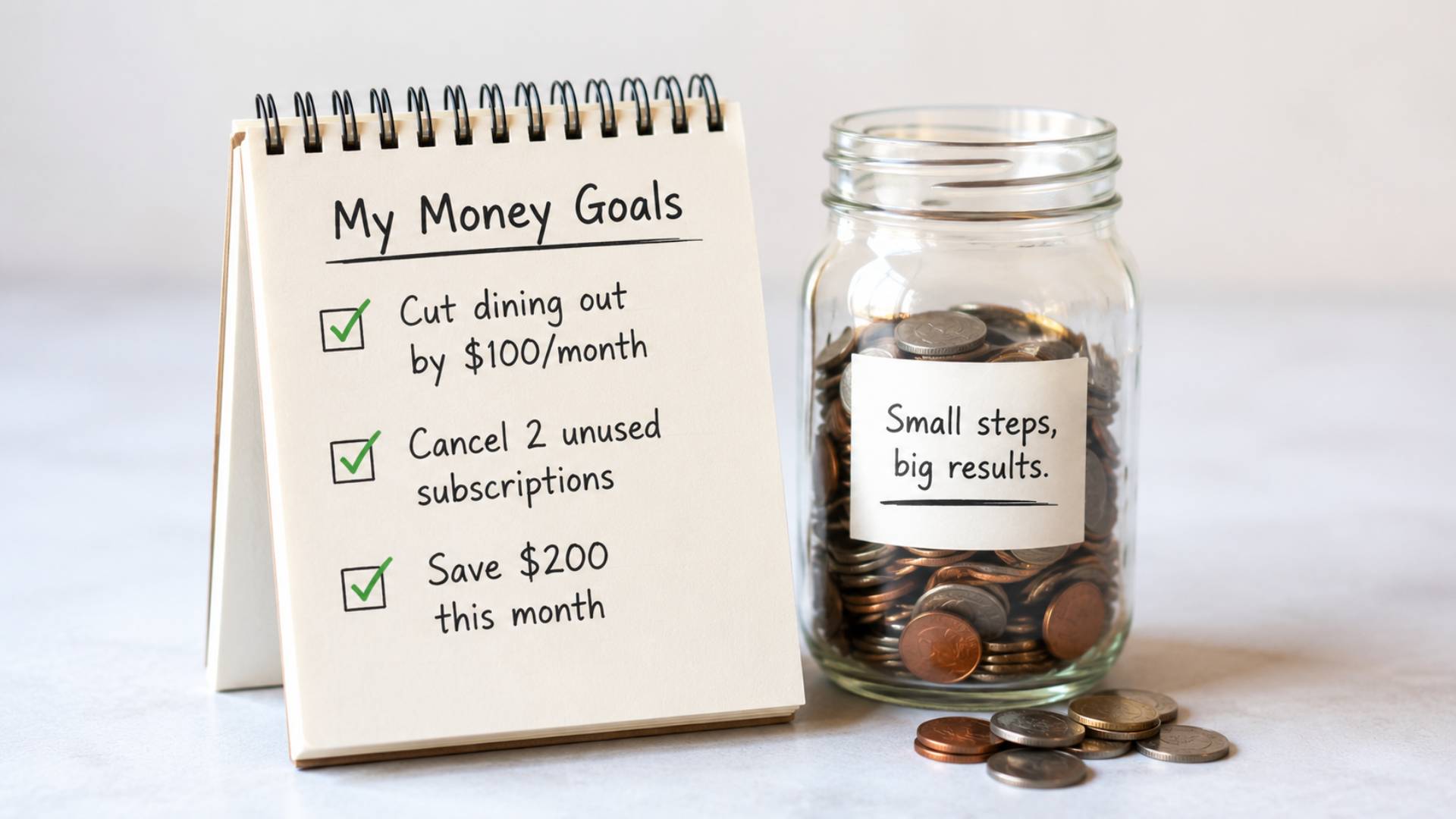
Use what you just learned to set two or three specific, small goals rather than a massive overhaul. Something like cutting dining out by one hundred dollars a month or canceling two unused subscriptions works far better than a vague resolution to spend less.
50 Things to Stop Buying to Save Money offers a solid starting point if you want more specific ideas on where to trim without feeling deprived. Small, specific goals stick because they’re easy to measure and don’t require dramatic lifestyle changes overnight.
Common Expense Audit Mistakes
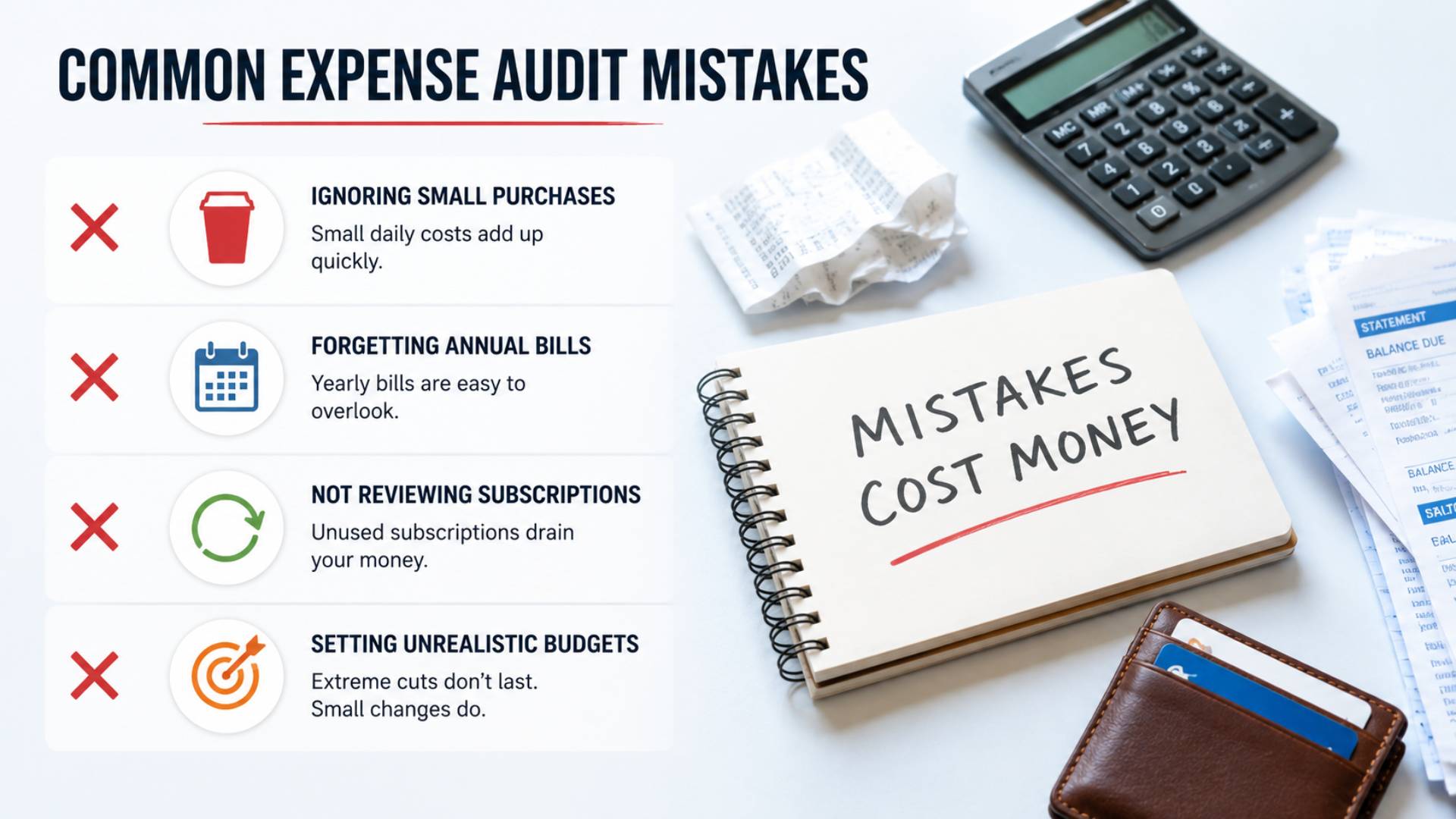
A few missteps show up again and again and quietly undermine an otherwise solid expense audit.
1. Ignoring Small Purchases
A five dollar coffee doesn’t feel significant, but daily small purchases often add up to more than a single large expense by the end of the month.
2. Forgetting Annual Bills
Car registration, annual subscriptions, and insurance premiums paid yearly are easy to overlook since they don’t show up in a single monthly statement.
3. Not Reviewing Subscriptions
Subscriptions are designed to be forgotten. A full review every few months catches ones that quietly kept charging long after you stopped using them.
4. Setting Unrealistic Budgets
Cutting spending too aggressively after an audit usually backfires within a few weeks. Small, sustainable adjustments hold up far better than extreme restriction.
Benefits of Regular Expense Audits
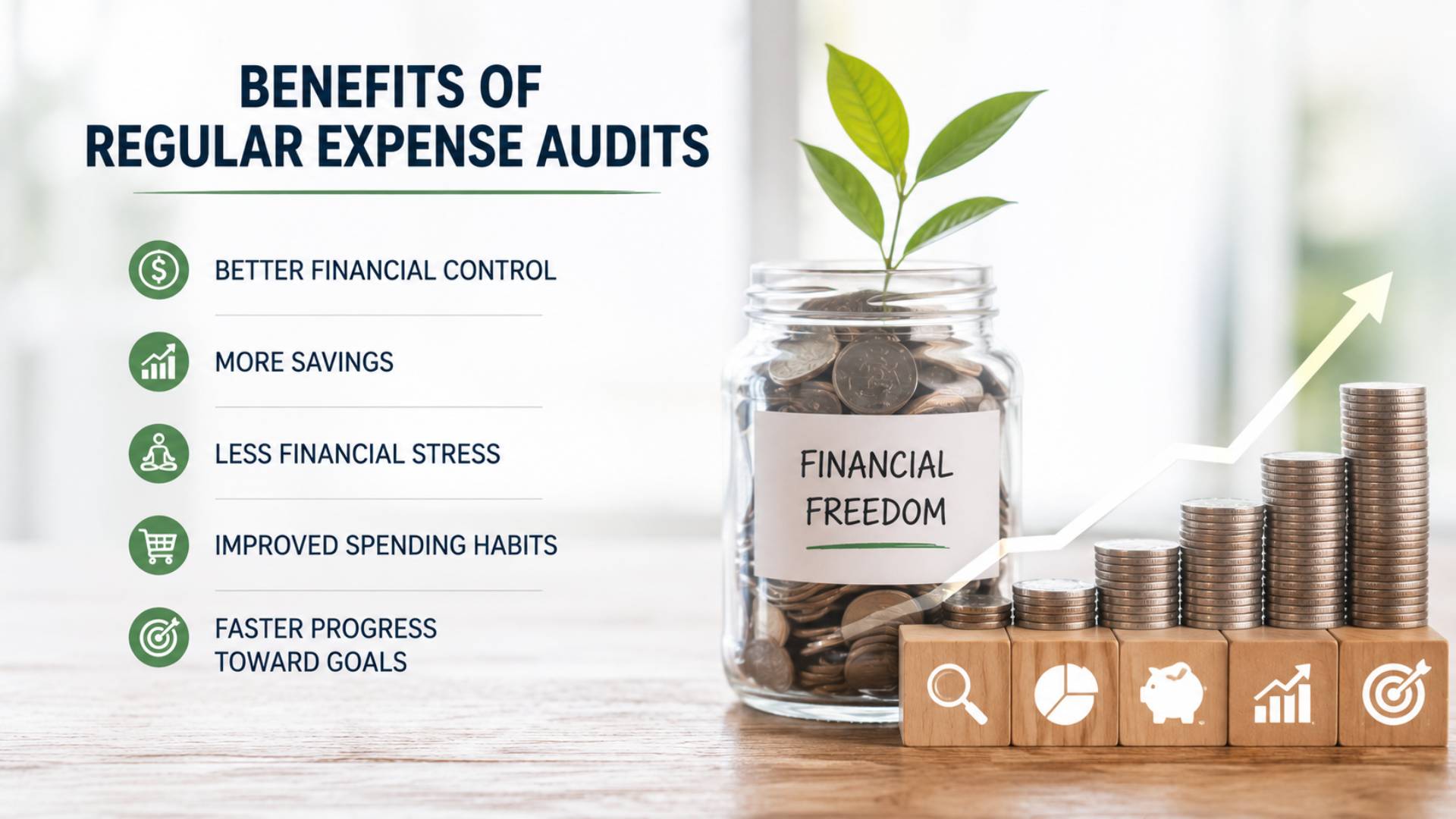
You know what? Doing a personal audit consistently actually pays off in several ways. You get better financial control since you always know where your money stands. Savings tend to increase naturally once wasteful spending is identified and cut. There’s less stress around money in general, since uncertainty is often what makes finances feel overwhelming in the first place.
Spending habits improve because you’re making informed choices instead of reactive ones. And financial goals, whether that’s paying off debt or building an emergency fund, move faster once leaks are plugged.
If you’re working through existing debt while tightening your budget, Pay Off Debt Fast on a Low Income pairs well with this process, since a clear expense picture makes debt payoff strategies far more effective.
FAQs
How often should I do an expense audit?
Once a month works well for most people, especially during the first few months of building better financial habits. After that, a quarterly check-in is usually enough to stay on track.
How long does an expense audit take?
With bank statements in front of you and a simple system, most people finish in thirty to sixty minutes. It gets faster each time you repeat the process.
What expenses should I cut first?
Start with unused subscriptions and duplicate services. These are the easiest cuts since they usually don’t affect your daily life or comfort at all.
Is an expense audit the same as budgeting?
Not quite. An audit is a snapshot of past spending, while a budget is a forward-looking plan. Most people do an audit first, then build a budget based on what they find.
Conclusion – The Bottom Line!
A personal expense audit doesn’t need to be complicated or time-consuming to be effective. In under an hour, you can uncover exactly where your money is going and identify simple changes that make a real difference.
If you’re also exploring ways to boost income alongside cutting expenses, 15 Online Business Ideas to Start With No Money and Best Freelance Skills to Learn in 2026 both offer practical paths worth considering.
Small, consistent reviews like this one build the kind of financial awareness that compounds over time. Start with one hour this week, and let the numbers guide your next move.