


Build a Home Workout Consistency Tracker That Keeps You Motivated
A home workout consistency tracker works because it turns invisible effort into a visible record, and visible records change behavior. Most people quit workouts not from a lack of discipline, but from a lack of proof that anything is working. This guide covers how to set weekly goals, log sessions, and build a tracker that sticks.
Research also backs this up. A University College London study found new habits take a median of 66 days to feel automatic, and people who write goals down are far more likely to reach them. Below are eight steps toward stronger healthy habits, plus four free template formats worth trying.
Why Most Home Workout Plans Fail

Most home workout plans fail within a few weeks, not because the moves are wrong, but because no structure holds them up. A vague plan rarely survives a busy Tuesday. Without a workout schedule or any way to measure progress, fitness motivation runs out fast, right when results are about to show.
The missing piece is rarely effort. It is tracking. A workout habit tracker that lives only in your head disappears once life gets busy, and progress you cannot see becomes progress you stop believing in. Even a 15 Minute Home Workout for Busy People beats a plan you never open again.
What Makes a Good Workout Tracker

1. Keep It Simple
A workout planner only earns its place in your routine if you actually use it. Skip complicated spreadsheets with a dozen columns and track just the essentials:
- The date
- The workout type
- How long you trained
- How you felt afterward
Simplicity keeps habit tracking light enough to survive a busy week.
2. Track Habits Instead of Perfection
Perfect weeks are rare, and chasing them backfires. A good consistency tracker measures whether you showed up, not whether every session was flawless. Missing one workout should register as a footnote, not a failure that talks you out of the next session too.
Kaiser Permanente researchers found that people who kept daily food diaries lost twice as much weight as those who kept none, clear evidence that simple tracking changes behavior more than most people expect. The same logic applies to a home workout: the act of writing it down does the real work.
3. Make Progress Visible
Visible progress fuels motivation better than any pep talk. When you can see three straight weeks of checked boxes, your brain registers real momentum. This is why a paper calendar or an app streak works so well. It turns effort into evidence, and that evidence is what turns short term effort into healthy habits that hold up once the initial excitement fades.
Build Your Workout Consistency Tracker
Step 1. Set Weekly Success Goals
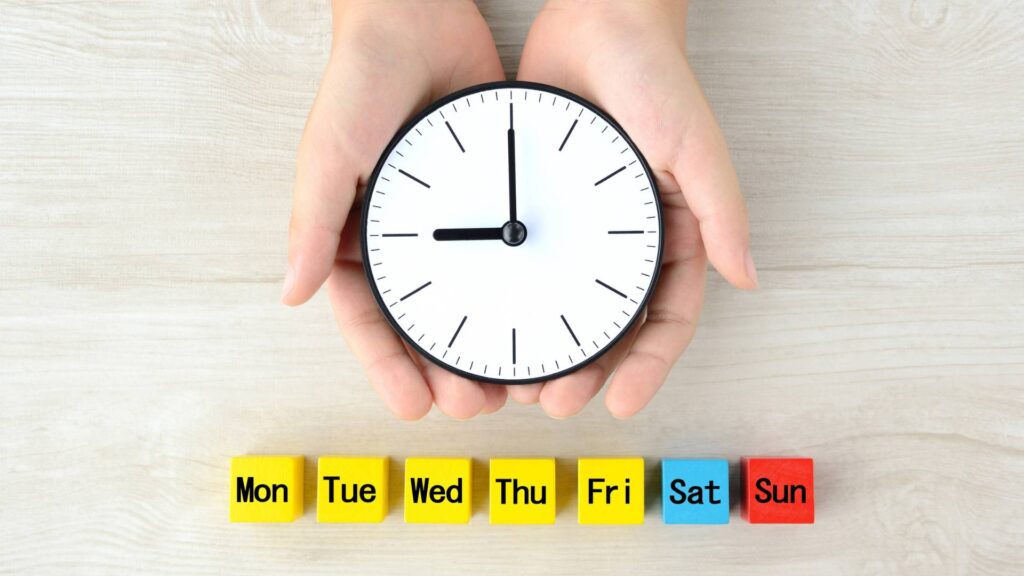
Start with a specific, written weekly target that ties to your bigger fitness goals: three sessions, four sessions, or thirty minutes of movement most days. Writing the number down matters more than picking the perfect one. A Dominican University of California study found that people who wrote their goals down were 42 percent more likely to achieve them than people who only thought about them.
Step 2. Choose What You’ll Track
Decide what belongs in your exercise tracker before you start. At minimum, log the date and whether you worked out. Once that habit sticks, a few optional extras add real value without adding clutter:
- Mood or energy level
- Sleep the night before
- Hydration through the day
Fewer columns mean fewer excuses to skip logging, and a lean tracker gets used far more often than a detailed one.
Step 3. Add Workout Types
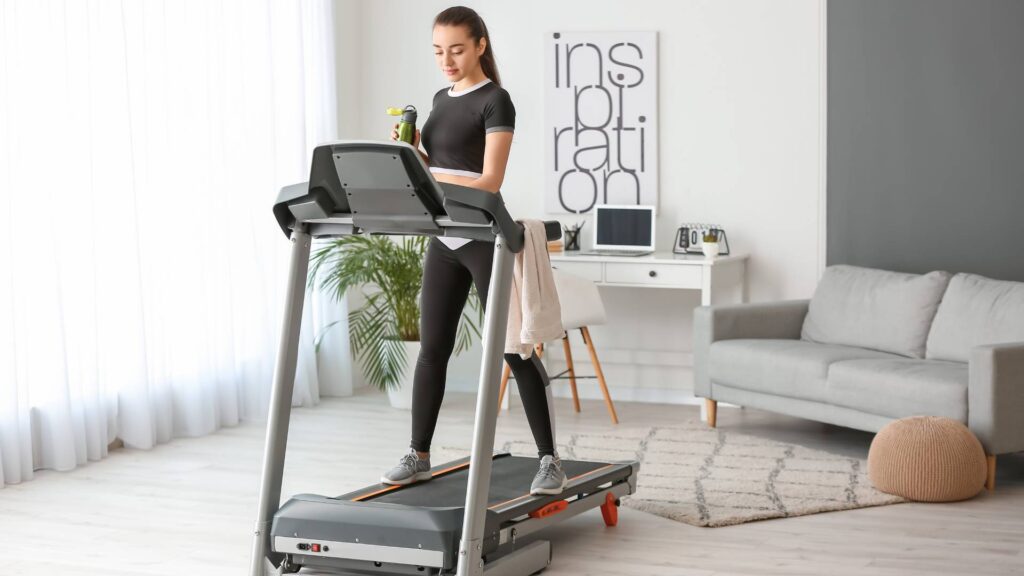
List the categories you actually do: strength, cardio, mobility, or a quick home fitness routine you repeat often. Labeling each entry helps you spot patterns, like too much cardio and not enough strength work, so you can adjust your routine before burnout or boredom sets in. A quick glance at a month of entries usually tells you more about your real habits than memory ever could.
Step 4. Record Time and Effort

Note how long you trained and how hard the session felt, even a simple one to ten scale works fine. Over a month, this turns your exercise log into a rough map of your energy and recovery. If effort scores keep dropping, pair training days with one of our Healthy Smoothie Recipes for Energy to help close the gap.
Step 5. Schedule Rest Days
Rest days belong in the tracker too, not as blank space but as planned entries on your workout calendar. Including recovery on the calendar prevents the guilt spiral that makes people quit after one missed session. Rest is part of the plan, not a break from it. A tracker that only counts hard sessions quietly punishes the recovery your body actually needs.
Step 6. Review Your Week
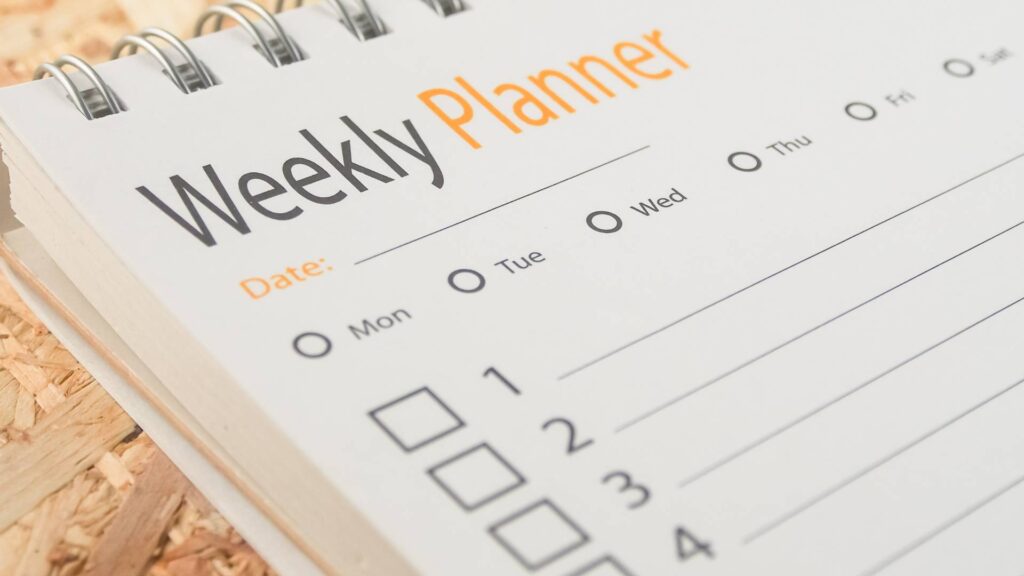
Set aside five minutes every Sunday to look back. Did you hit your target? What got in the way? This short weekly review is where a habit tracker earns its keep, and where raw data and small consistency tips turn into real course corrections instead of a graveyard of unused rows.
Step 7. Add Monthly Milestones
Every four weeks, zoom out. Compare this month’s consistency to last month’s, then set one modest goal for the next thirty days. Milestones keep the long view in focus, which matters since new habits take a median of 66 days before they start feeling automatic.
Step 8. Improve Your Tracker Every Month
Your first version will not be perfect, and that is fine. Drop the columns you never fill in, and add ones you keep wishing you had. A consistency tracker should evolve with your routine, not force your routine to fit a rigid template you built on day one.
What Your Tracker Should Look Like
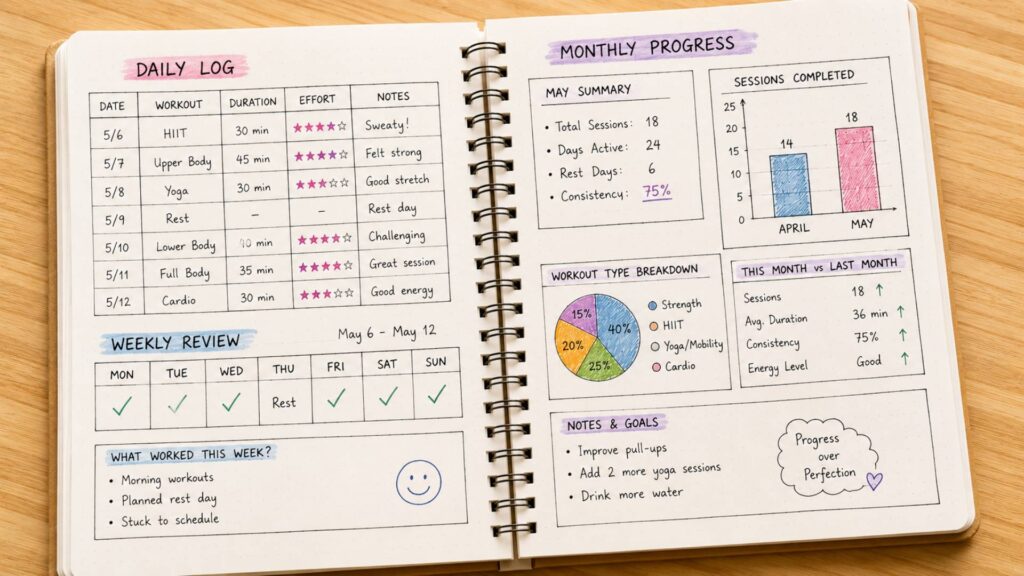
- Daily Log
Keep the daily log short: date, workout type, duration, and a quick note on effort. This is progress tracking in its rawest form, the backbone of any fitness tracker, built for speed so you can fill it out in under a minute after each session.
- Weekly Review
The weekly view rolls seven days into one snapshot: sessions completed against your weekly schedule, plus a short note on what worked. This is where patterns become obvious and daily routine choices start making sense.
- Monthly Progress Dashboard
Once a month, pull everything together:
- Total sessions completed
- Workout type breakdown
- This month versus last month
A simple dashboard, even a hand-drawn one, turns scattered daily entries into a story about how far you have come. It is also the easiest place to notice when your energy, not your motivation, is the thing that needs attention.
Free Templates You Can Create

1. Paper Tracker
A printed page or wall calendar works well if you like writing by hand. Draw seven boxes per week, check one off after each workout, and keep it somewhere visible, like next to your coffee maker.
2. Spreadsheet
A basic spreadsheet gives your fitness habit tracker more room to grow. Add columns for workout type, duration, and notes, then use simple formulas to total your weekly sessions automatically. This version doubles as a workout journal you can search through months later.
3. Habit Tracker App
If you would rather track from your phone, a workout habit tracker app works well for reminders and streak counts. Look for one that lets you log a short note, not just a checkmark, since context matters more than the streak number itself.
4. Wall Calendar
A large wall calendar turns your consistency tracker into a shared, visible commitment, especially useful if you are training with a partner or roommate. Big red Xs across the days create a motivation boost that is hard to ignore each morning.
FAQs
How often should I update my workout tracker?
Right after each workout, while the details are still fresh. Waiting until the weekend turns half the entries into guesswork.
Is a printable tracker better than an app?
Neither one is objectively better, but printable trackers stay visible, while apps send reminders. Choose whichever one you will actually open.
Should I track rest days?
Yes, absolutely. Logging rest turns recovery into part of the plan instead of something to feel guilty about.
Conclusion – A Few Final Words!
A consistency tracker will not do the workouts for you, but it will show you the truth about your habits, one week at a time. The research is consistent: written goals, visible progress, and forgiving systems beat raw willpower every time.
Whether you choose a paper calendar, a spreadsheet, or an app, the format matters less than the habit of filling it in. Start simple, track for one month, then adjust based on what you see.
If you are just getting started, pair your new tracker with our guide to Best Home Workouts for Beginners, and let the data build the motivation your first month needs.