


How to Build a Momentum Tracker Instead of Chasing Streaks
A single missed day resets most habit trackers straight back to zero, and that number does something strange to the brain. Weeks of consistent effort suddenly feel erased, even though the actual habit built during that time hasn’t disappeared at all. A momentum tracker fixes this exact problem by measuring your weekly completion rate and long-term trend instead of counting consecutive perfect days.
This approach shifts the entire framework of habit tracking. You’ll build a system around five simple steps, choosing one habit, defining a realistic success rate, tracking weekly progress, recording small wins, and reviewing every week for patterns worth adjusting.
Why Chasing Streaks Often Backfires

Streaks feel motivating at first because they reward perfection with a visible, growing number. Every additional day adds to a running total that feels increasingly valuable, and that growing value is exactly what makes it so painful to lose. The problem shows up the moment that number breaks.
Research on the “what the hell effect,” a term coined by psychologists Janet Polivy and C. Peter Herman, describes exactly this pattern. One missed day triggers a sense of total failure, which often leads people to abandon the entire habit instead of simply continuing the next day.
A streak tracker treats every miss as catastrophic, resetting a 40-day effort back to a demoralizing zero. That single number erases weeks of genuine progress in a person’s mind, even though nothing about their actual capability changed overnight. The habit still exists.
The muscle memory, the routine, the small daily adjustments already made- none of that disappears just because a counter reset to one.
What Is a Momentum Tracker?

A momentum tracker measures consistency over time instead of counting consecutive days without a single miss. Rather than a binary streak counter that resets after one skipped day, it calculates a weekly or monthly completion percentage that reflects your overall pattern. This small shift in framing changes how the entire tracking experience feels day to day.
This shift matters more than it might seem on the surface. A habit tracker without streaks doesn’t punish a single missed Tuesday, since one missed day out of thirty still represents a 97% completion rate. That number tells a far more honest story about your actual consistency than a streak counter that simply drops back to day one. Instead of fixating on an unbroken chain, you start paying attention to the bigger, more accurate picture of how often you actually show up.
Why Momentum Builds Better Habits
1. Missing One Day Doesn’t Erase Progress
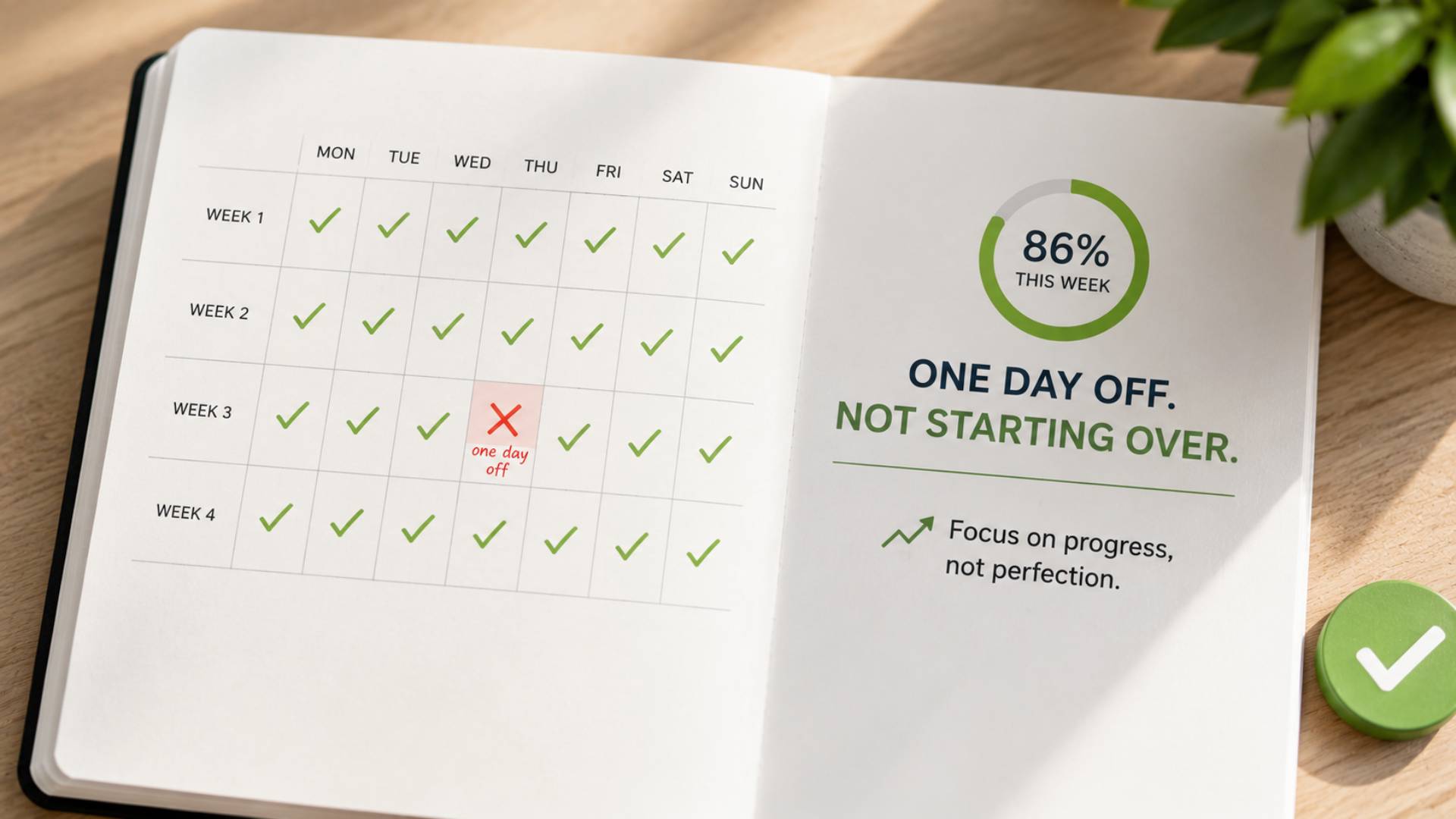
Research from psychologist Phillippa Lally at University College London found that missing a single day has no measurable effect on long-term habit formation. Her study, which tracked participants building new habits over several months, found that consistency, not perfection, was what actually predicted whether a habit stuck. What actually derails progress is missing two or more days in a row, since that’s when a temporary lapse starts turning into a new, less helpful pattern.
A momentum tracker reflects this reality directly, showing your overall trend instead of punishing one off days with a hard reset.
When you glance at a weekly percentage instead of a broken streak, a single missed day simply becomes a small dip in an otherwise strong pattern, not a reason to quit entirely.
2. Small Wins Keep Motivation Alive
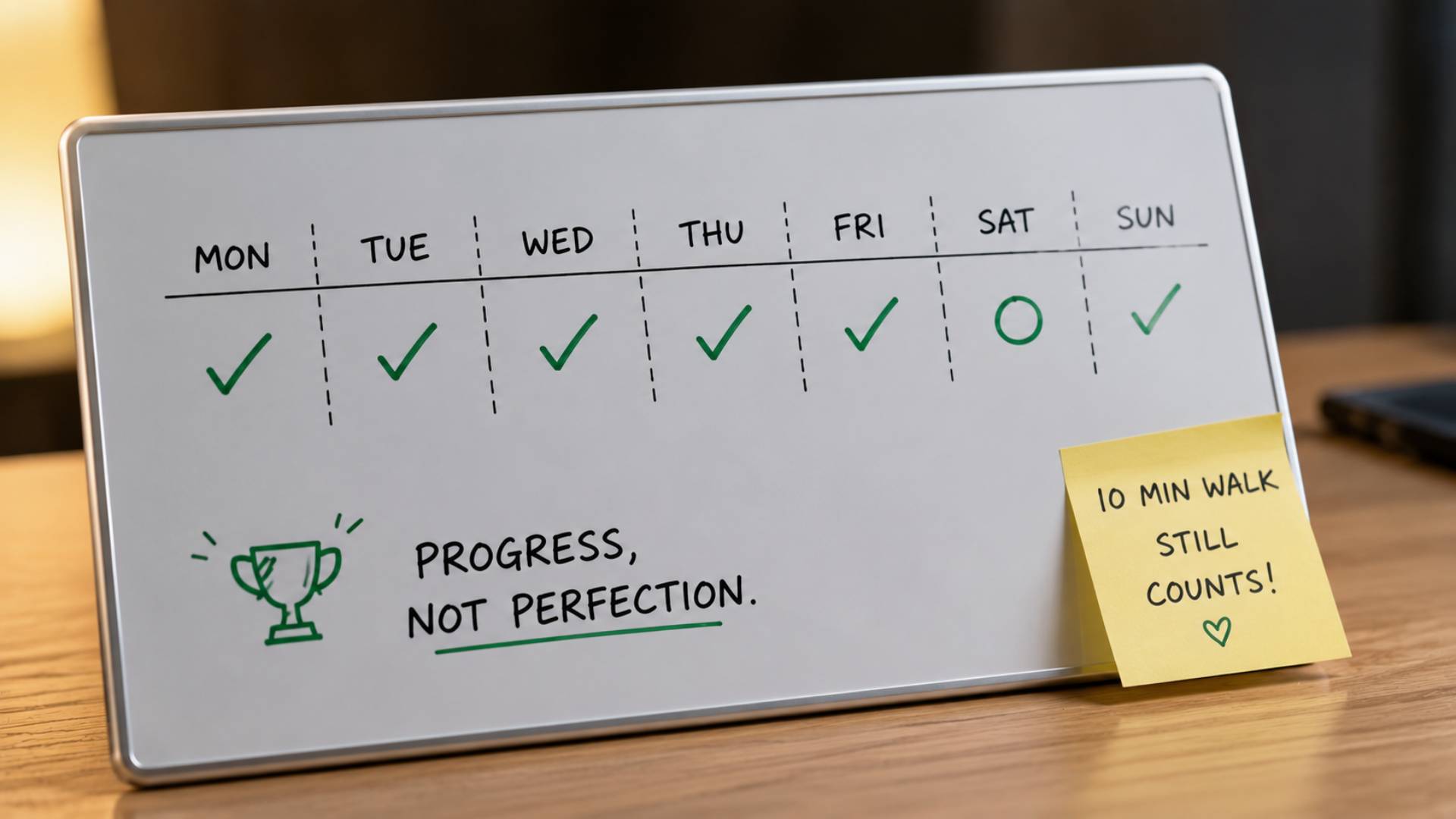
A momentum tracker highlights partial progress in a way a streak counter simply can’t. A ten minute walk on a day you planned for thirty minutes still counts as a completed session, and seeing that logged keeps motivation intact instead of feeling like a failure compared to your best effort. This matters because real life rarely allows for the exact same effort every single day, and a tracking system that only recognizes perfect execution sets you up to feel discouraged constantly.
Build Self Discipline covers this same principle of rewarding effort over an impossible standard of perfection, and applying that thinking directly to your tracker keeps the whole system feeling supportive instead of punishing.
3. Consistency Beats Perfection
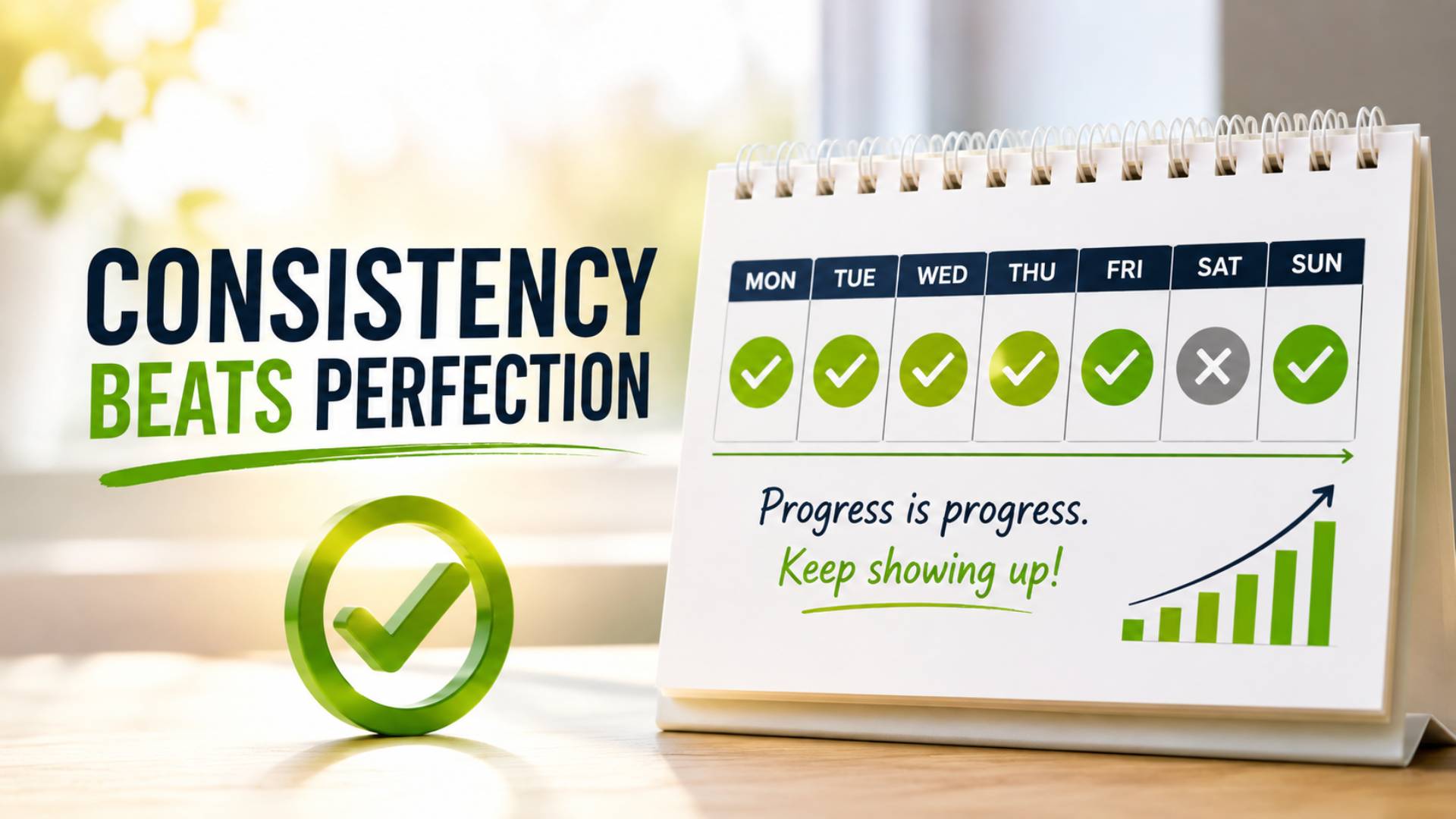
A meta-analysis covering 138 studies and nearly 20,000 participants, published in Psychological Bulletin, found that self-monitoring significantly increases the likelihood of reaching a goal. Notably, this benefit comes from the act of tracking progress itself, not from achieving a flawless record. Consistency, tracked honestly over weeks and months, is what the research actually points to as the real driver of lasting habits.
This finding matters because it shifts the entire goal of tracking. You’re not trying to build the longest possible unbroken chain. You’re trying to build a habit that survives real weeks, with real interruptions, real busy days, and real moments when a shortened or imperfect version of the habit is genuinely the best you can manage.
How to Build Your Own Momentum Tracker
Here’s a practical, 5-step system for building your own tracker from scratch, starting today with whatever tools you already have on hand.
Step 1. Choose One Habit
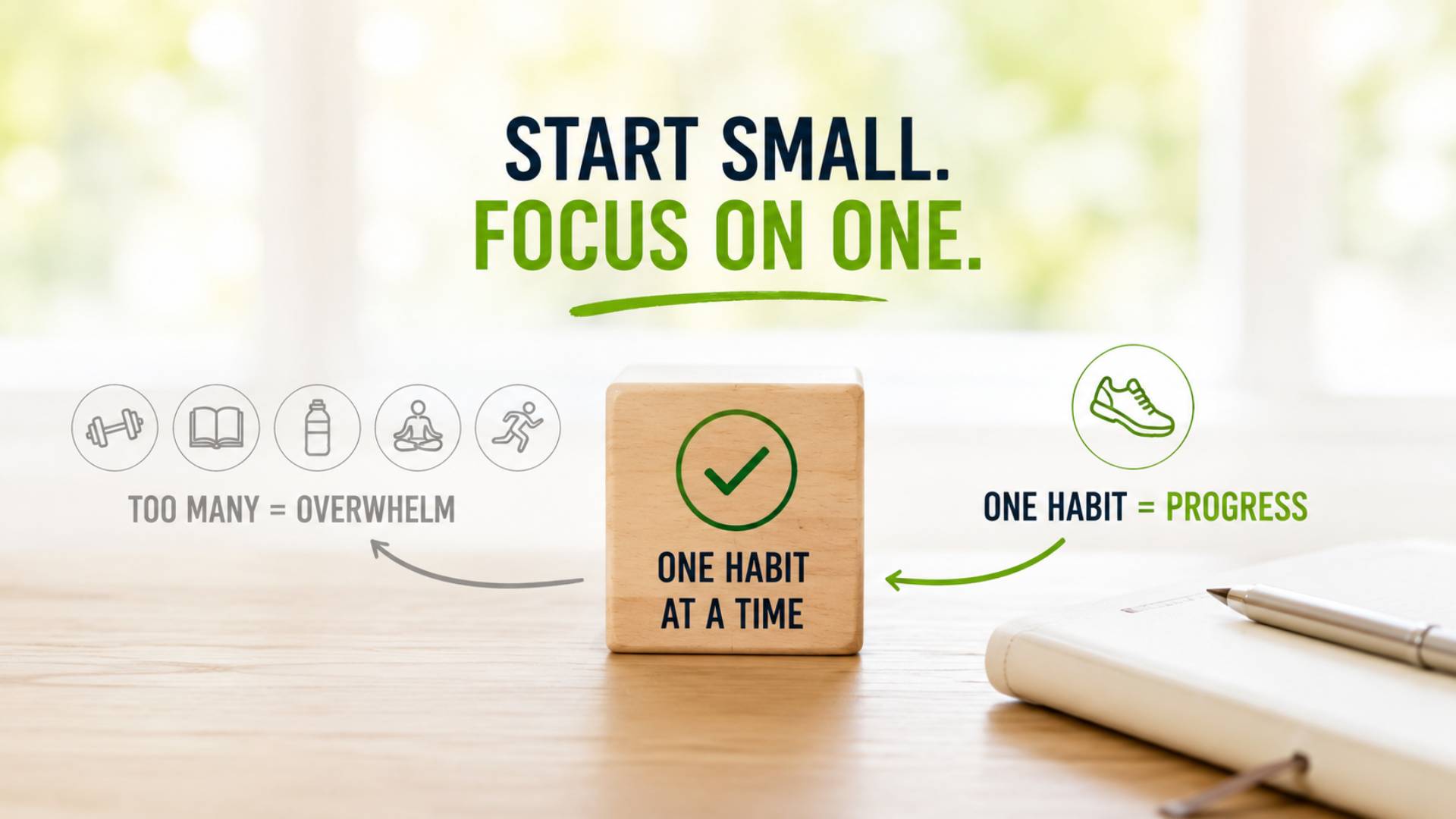
Pick a single habit to track first. Trying to build a momentum tracker around five habits at once usually leads to overwhelm within the first week, and that overwhelm is often what causes people to abandon tracking altogether before the system even has a chance to prove useful. Start with one clear, specific behavior you actually want to build, something simple enough to define with a clear yes or no each day.
Step 2. Define Your Success Rate

Instead of setting the bar at “every day,” define a realistic weekly target. A few examples work well here:
- 5 out of 7 days
- 20 days each month
- 80% consistency
This single shift removes the all-or-nothing thinking that streak trackers tend to reinforce. A defined success rate gives you room to miss a day without feeling like the entire effort has collapsed. It also makes your goal genuinely achievable, since most people can realistically hit five out of seven days far more often than they can maintain a perfect daily record for months on end.
Step 3. Track Weekly Progress

Log three simple numbers each week to build your momentum tracker:
- Completed days
- Missed days
- Overall percentage for the week
This weekly view reveals patterns a daily streak count never shows, like whether Mondays consistently trip you up or whether weekends tend to be your strongest days. Once you spot a pattern like this, you can actually address it directly, adjusting your schedule around the specific day that tends to derail you instead of just feeling generally inconsistent.
Step 4. Record Small Wins
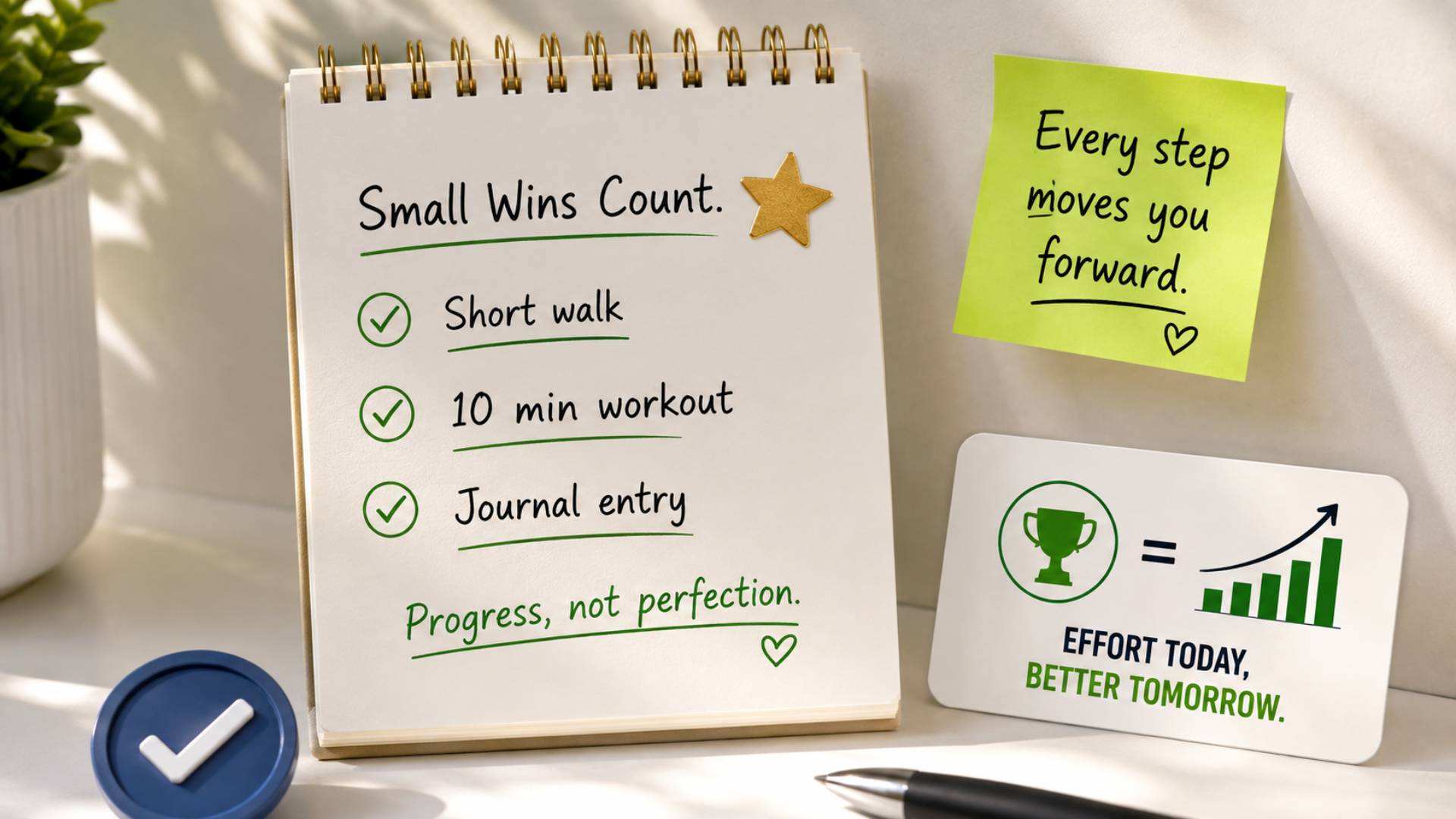
Note anything that went well, even a partial effort on an otherwise difficult day. A shortened workout still counts. A rushed but completed journal entry still counts. Recording these small wins keeps your momentum tracker honest about effort, not just flawless execution, and over time this record becomes genuinely encouraging to look back on.
Step 5. Review Every Week
Set aside five minutes each week to look back at your numbers and ask a few honest questions:
- What worked?
- What made the habit easier?
- What interrupted my routine?
- What will I adjust next week?
Weekly reviews help maintain momentum by focusing on trends instead of isolated misses. How Discipline Reset Day Helps You Stay Consistent covers a similar weekly review structure that pairs naturally with this exact step, and combining both routines into one sitting each week saves time while reinforcing the same consistency-minded approach.
What to Track Instead of Streaks

1. Weekly Completion Rate
The percentage of planned days you actually completed each week gives a far more accurate snapshot of consistency than any single day ever could. This number becomes your primary indicator, the one figure you check first during your weekly review.
2. Monthly Consistency Score
Rolling this same percentage up into a monthly view smooths out any single rough week and shows your real, long term pattern. A single difficult week barely moves this number, which keeps your overall motivation protected from short term setbacks.
3. Total Habit Sessions
Simply counting total completed sessions over a month or quarter gives a concrete, motivating number that never resets to zero because of one missed day. Watching this number climb steadily, even with the occasional gap, provides a genuine sense of accumulated progress.
4. Habit Strength
Note how automatic the habit feels on a simple scale, from requiring real effort to feeling nearly automatic. This qualitative measure often shifts well before your completion percentage does, giving you an early signal that the habit is genuinely taking root.
5. Personal Best Weeks
Track your strongest week on record as a benchmark to beat, rather than an unbroken streak that inevitably ends at some point. This reframes your goal from avoiding a single miss to gradually improving your best possible performance.
Momentum Tracker vs Streak Tracker
| Momentum Tracker | Streak Tracker |
| Rewards consistency | Rewards perfection |
| One missed day has little impact | One missed day resets progress |
| Encourages long term habits | Can encourage all or nothing thinking |
| Tracks weekly patterns | Tracks consecutive days |
The difference here isn’t cosmetic. A momentum tracker is built around the same behavioral research that shows one missed day rarely matters, while a streak tracker is built around a number that treats every miss as a reset button.
Choosing which system to use isn’t just a preference, it directly shapes how resilient your habit will be when life inevitably gets in the way.
Best Tools for Momentum Tracking
1. Paper Journal

A simple notebook works well for anyone who prefers writing over typing. A quick weekly grid with completed and missed days is all this requires, and the physical act of writing can make the weekly review feel more deliberate.
2. Printable Trackers
A printed weekly or monthly sheet posted somewhere visible, like a fridge or desk, keeps your momentum tracker in view without needing to open an app. Visibility alone often improves consistency, since the tracker becomes a quiet daily reminder.
3. Notion Templates

Notion lets you build a fully customized momentum tracker with automatic percentage calculations, which removes the manual math from your weekly review. This option suits anyone already comfortable working inside digital productivity tools.
4. Google Sheets
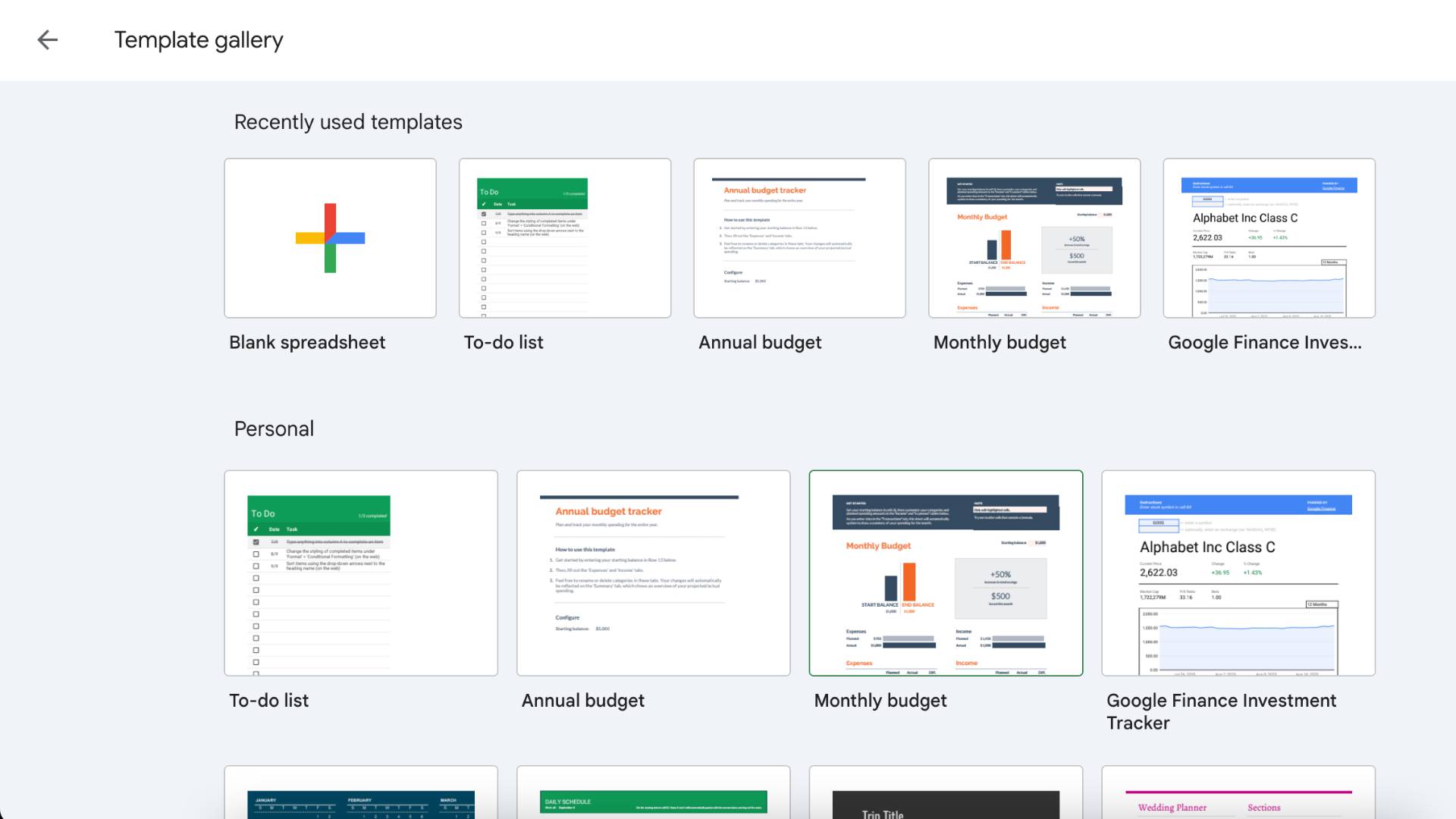
A spreadsheet gives you full control over how your weekly and monthly numbers are calculated, and formulas can update your completion percentage automatically as you log each day. This is a strong middle ground for anyone who wants automation without committing to a dedicated app.
5. Habit Tracking Apps
Apps that show long-term trend lines, not just a current streak count, work best here. Look specifically for ones offering a completion percentage view rather than a single number that resets after one miss, since that feature alone determines whether the app supports or undermines the momentum-based approach.
FAQs
Is a momentum tracker better than a streak tracker?
For most people, yes. A momentum tracker reflects the actual research on habit formation more accurately, since it doesn’t punish a single missed day the way a streak counter does.
What percentage counts as consistent?
Somewhere between 70% and 85% weekly completion is a strong, sustainable target for most habits. This range allows for real life interruptions while still building genuine momentum over time.
Can I use a spreadsheet instead of an app?
Absolutely. A spreadsheet gives you complete control over your momentum tracker, and simple formulas can calculate your weekly and monthly percentages automatically without any extra effort.
How many habits should I track at once?
Start with just one or two. Tracking too many habits at once tends to drain the exact motivation your momentum tracker is meant to protect. Improve Mental Wellness Naturally touches on how simplifying your daily focus supports this same principle beyond just habit tracking.
The Bottom Line!!
A momentum tracker works because it measures what actually matters, your real pattern over time, instead of punishing a single off day with a total reset. The five-step system covered here, choosing one habit, defining a success rate, tracking weekly progress, recording small wins, and reviewing consistently, builds a system grounded in real behavioral research rather than an arbitrary number that resets every time life gets in the way.
Research on habit formation and self-monitoring both point in the same direction. Missing one day rarely matters, but a punishing streak counter can convince you otherwise, which is exactly the trap this approach avoids. Building momentum, not chasing perfection, is what actually sustains a habit for months and years, long after the initial motivation of a new tracker has worn off.
Start this week with one habit and an honest weekly target. How to Build Self Confidence Naturally pairs well with this system, since consistent, visible progress is one of the most reliable ways to build genuine self-trust over time.