


10 Natural Ways to Reduce Screen Time Without Feeling Restricted
Most people don’t actually want to quit their phones. They just want their phones to stop running the show. There’s a real difference between using technology on purpose and reaching for it out of habit fifty times a day without even noticing.
That gap is where most screen time frustration lives. You sit down to relax and somehow forty minutes disappear into scrolling you don’t remember choosing. You want to reduce screen time, but every article on the topic makes it sound like you need to throw your phone in a drawer and disappear into the woods.
This guide takes a different approach. These are ten natural ways to reduce screen time that work with your actual life, not against it. No extreme rules, no guilt, just small shifts that add up.
Why Screen Time Feels Hard to Reduce?

Phones are built to be hard to put down. Every notification, red badge, and autoplay feature is engineered to pull your attention back in, again and again. That’s not a willpower problem, it’s a design problem. Add in genuine habits like checking email for work or texting family, and the line between necessary use and mindless scrolling gets blurry fast.
Reducing screen time feels hard because you’re fighting both engineered design and years of built up habit at the same time.
How to Reduce Screen Time Without Feeling Restricted
1. Create Screen Free Zones

Pick a few physical spaces in your home where phones simply don’t belong. The dinner table, the bedroom, the bathroom, wherever makes sense for your life. This isn’t about punishment, it’s about giving certain parts of your day a natural break from screens without having to think about it constantly.
Once a zone is set, it becomes automatic. You’re not making a decision every time, you’re just following a boundary you already set for yourself. Screen-free zones are one of the easiest healthy screen habits to maintain because they require zero ongoing willpower once they’re in place.
2. Start Your Morning Offline

The first hour after waking up sets the tone for your entire day. Reaching for your phone before your feet even hit the floor puts you in reactive mode before you’ve had a chance to think for yourself.
Try keeping your phone out of reach for the first thirty to sixty minutes of your morning. Use that time for coffee, a short walk, or just sitting quietly. Simple Living Habits That Save Time and Energy covers several other morning routines that pair well with this shift if you want to build a fuller system around it.
3. Replace Scrolling With Real Activities

Reducing screen time works better when you’re replacing the habit with something, not just removing it and leaving a gap. An empty fifteen minutes with nothing to do usually ends with your phone back in your hand out of pure boredom.
A few offline hobbies worth keeping nearby:
- A book you’re actually excited to read
- A simple craft or hobby project
- A journal for quick daily reflection
- A puzzle or game you enjoy
Keep one of these within arm’s reach in the spots where you’d normally scroll, the couch, your nightstand, your bag.
4. Turn Off Unnecessary Notifications
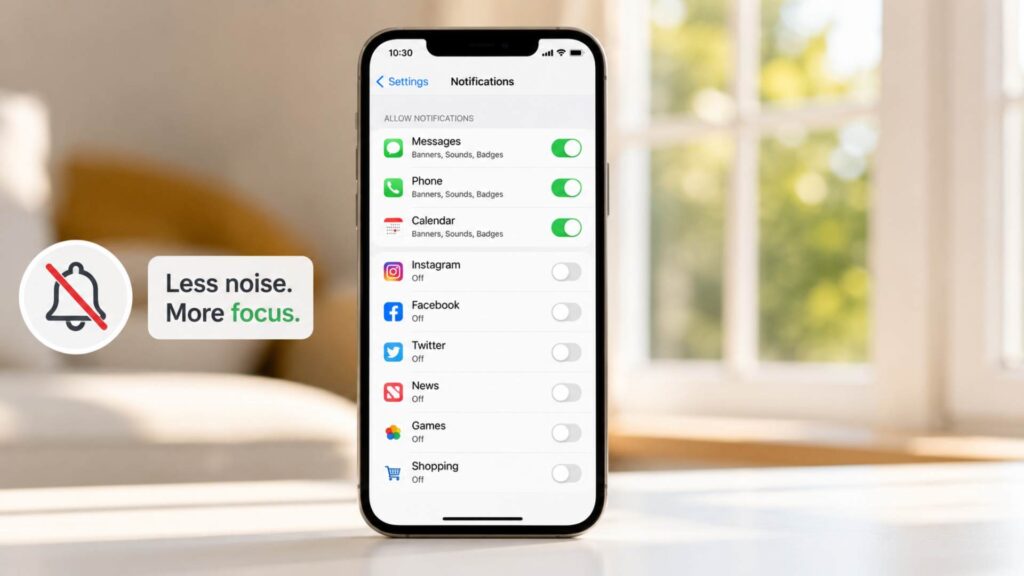
Notifications are one of the biggest drivers of unintentional phone use. Every buzz and banner pulls your attention away from whatever you were doing, and most of them aren’t actually urgent.
Go into your settings and turn off notifications for anything that isn’t a phone call, text, or calendar alert. Social media, games, shopping apps, and news alerts rarely need to interrupt your day in real time.
This single change reduces the number of times you pick up your phone without you having to change any other behavior at all.
5. Set Small Daily Limits
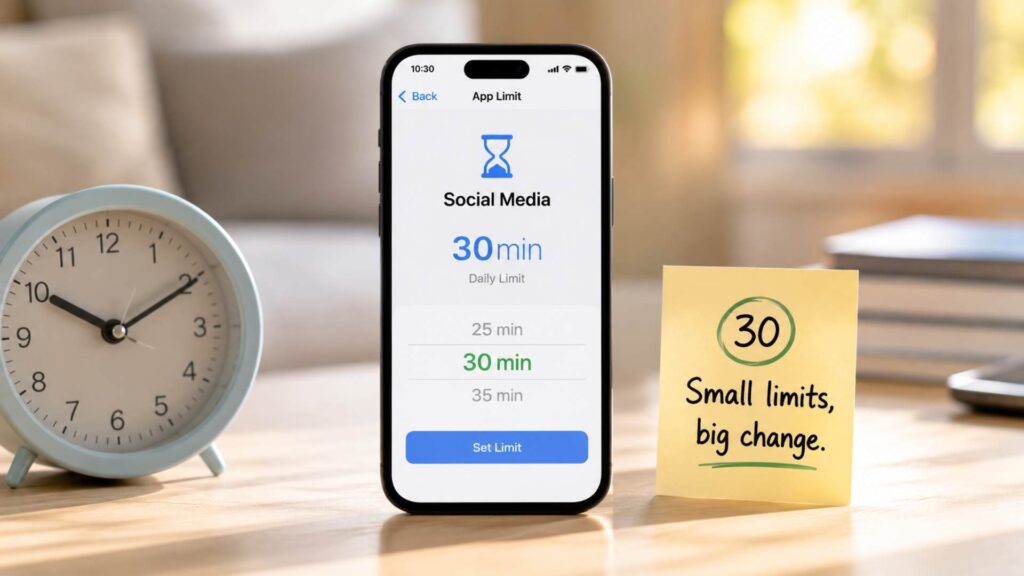
You don’t need a dramatic overhaul to see results. Small, specific limits work better than vague goals like “use my phone less.” Try capping one specific app at thirty minutes a day, or setting a rule that social media only happens after 5pm.
Most phones now have built in screen time tools that let you set these limits directly, which makes tracking effortless. Small daily limits build momentum without ever feeling like deprivation.
6. Keep Your Hands Busy

A lot of phone use isn’t really about wanting to check anything specific, it’s just restless hands looking for something to do. Give your hands an alternative and the urge to pick up your phone drops noticeably.
Knitting, doodling, playing with a stress ball, or even folding laundry all give your hands something to do during moments that would otherwise turn into mindless scrolling. It sounds small, but this habit makes a real difference for anyone trying to reduce screen time during downtime specifically.
7. Build Better Evening Habits
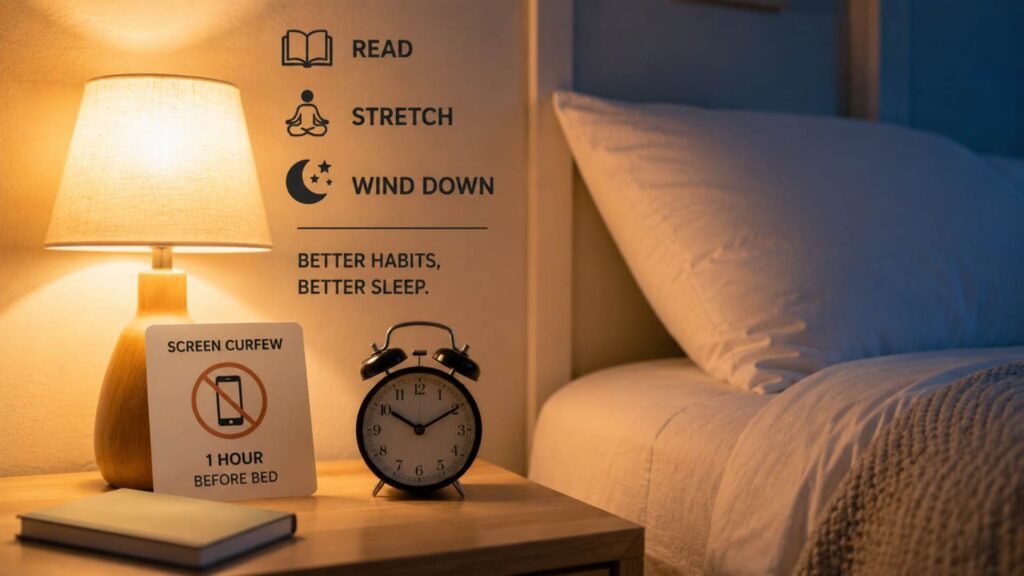
The hour before bed is one of the worst times for screen use, both for sleep quality and for breaking the daily cycle of scrolling. Blue light suppresses melatonin production, which makes it harder to fall asleep even when you’re exhausted.
Set a screen curfew about an hour before bed and build a simple bedtime routine to replace it, reading, stretching, or just winding down in a quiet room. 30 Day Digital Detox Challenge for Beginners walks through this kind of evening boundary in more depth if you want a structured approach to building it.
8. Spend More Time Outdoors

Fresh air and natural light do something screens simply can’t. Time outside naturally pulls your attention away from devices without requiring any restriction at all, since most outdoor activities aren’t compatible with constant phone use anyway.
A short daily walk, gardening, or just sitting outside for ten minutes gives your brain a genuine break. Over time, this becomes one of the more enjoyable natural ways to reduce screen time because it doesn’t feel like a rule, it feels like something you actually want to do.
9. Make Social Time Phone Free

Put your phone away when you’re with other people, whether that’s family dinner, a coffee with a friend, or just hanging out at home. This single habit does more for the quality of your relationships than almost anything else on this list.
Being fully present during family time and social moments also reinforces the value of connection over convenience, which makes reaching for your phone during those moments feel less automatic over time.
10. Focus on Progress, Not Perfection

Some days will involve more screen time than others, and that’s fine. The goal isn’t a flawless record, it’s a general downward trend over weeks and months. Treating one high usage day as a failure often leads people to give up entirely instead of just continuing forward.
So you may track your general direction, not your daily perfection. That mindset alone makes the whole process of reducing screen time feel sustainable instead of stressful.
Some Benefits of Less Screen Time

Cutting back on screens pays off in ways that show up fast once you start noticing them.
- Better focus: Fewer interruptions mean deeper concentration on the task in front of you
- Improved sleep: Less blue light exposure before bed leads to falling asleep faster and staying asleep longer
- Less stress: Constant notifications and comparison driven scrolling quietly raise anxiety levels over time
- Stronger relationships: Being present during conversations builds connection that scrolling next to someone never will
According to research published by the American Psychological Association, reduced screen time is directly associated with improved mood and lower reported stress levels, particularly when the reduction happens in the hours before sleep. Start Simple Living in a Fast Paced World explores how these smaller lifestyle shifts compound into a much bigger sense of daily calm over time.
FAQs
How much screen time is healthy?
There’s no single perfect number, since it depends heavily on work requirements and lifestyle. Most experts suggest keeping personal, non work screen time under two to three hours a day as a general target for better digital wellness.
How can I reduce phone use naturally?
Start with one or two habits from this list rather than trying everything at once. Small, consistent changes like screen free zones or turning off notifications tend to stick far longer than a complete overhaul.
Should I quit social media completely?
Not necessarily. Most people do better setting boundaries around when and how they use social media rather than cutting it out entirely, since sudden restriction often leads to a quick relapse back into old habits.
Conclusion – A Few Final Words!
Reducing screen time doesn’t require cutting technology out of your life or living by a long list of strict rules. It’s about building small, natural habits that quietly shift how much space your phone takes up in your day.
Pick two or three ideas from this list and start there. Screen free mornings, better evening routines, and a bit more outdoor time can shift your relationship with your phone more than any dramatic detox ever could.
Progress here isn’t about perfection, it’s about consistency. Give it a few weeks, pay attention to how you feel, and let the small changes do the work they’re actually capable of doing.