


Create a Bedtime Reset Checklist That Takes Less Than 10 Minutes
Most nights end the same way, scrolling in bed until your eyes get heavy, then falling asleep with tomorrow’s to-do list still spinning in your head. A 10-minute bedtime reset checklist fixes this by providing you with a fast and repeatable sequence to prepare your mind for tomorrow.
This isn’t another elaborate self-care ritual that requires candles and an hour of free time. It’s a practical list to reset your environment and relax your body into a calm state.
Why a Bedtime Reset Matters

Harvard Health researchers found that blue light exposure suppresses melatonin for roughly twice as long as comparable exposure to green light. Moreover, they recommend avoiding bright screens for two to three hours before bed whenever realistically possible.
A structured bedtime reset checklist interrupts that pattern directly. Instead of drifting into bed distracted and unprepared, a short, consistent routine signals to your brain that the day is actually over, which supports both faster sleep onset and a calmer next morning.
What Makes a Good Bedtime Reset Checklist?

A good bedtime routine checklist isn’t about doing more, it’s about doing the right few things in the right order. The best nightly reset routine takes under ten minutes total and covers 3 essential areas:
- Mental preparation for tomorrow
- Environmental cues for sleep
- Physical relaxation
And you know what? Simplicity is actually “the one thing” that makes a checklist sustainable for everyone.
Your 10-Minute Bedtime Reset Checklist
First 4 Minutes: Prepare Your Mind and Tomorrow

Start by clearing tomorrow off your mental plate so it stops competing with sleep the moment your head hits the pillow.
- Put your phone away and enable Do Not Disturb mode.
- Pack your bag or lay out tomorrow’s clothes so the morning doesn’t start with a search.
- Check tomorrow’s schedule so nothing surprises you once you’re already rushing to get out the door.
Using a screen before bed gives adults a 33% higher rate of poor sleep quality compared to those who completely avoid devices.
Preparing for tomorrow reduces decision fatigue and quiets the racing thoughts that often keep people awake long after they’ve turned off the lights, staring at the ceiling, running through everything they still need to remember.
Improve Mental Wellness covers additional ways that offloading tomorrow’s decisions tonight supports a calmer, more regulated mind overall, since an unresolved mental to-do list is one of the most common reasons people report lying awake despite feeling physically exhausted.
Next 3 Minutes: Reset Your Environment
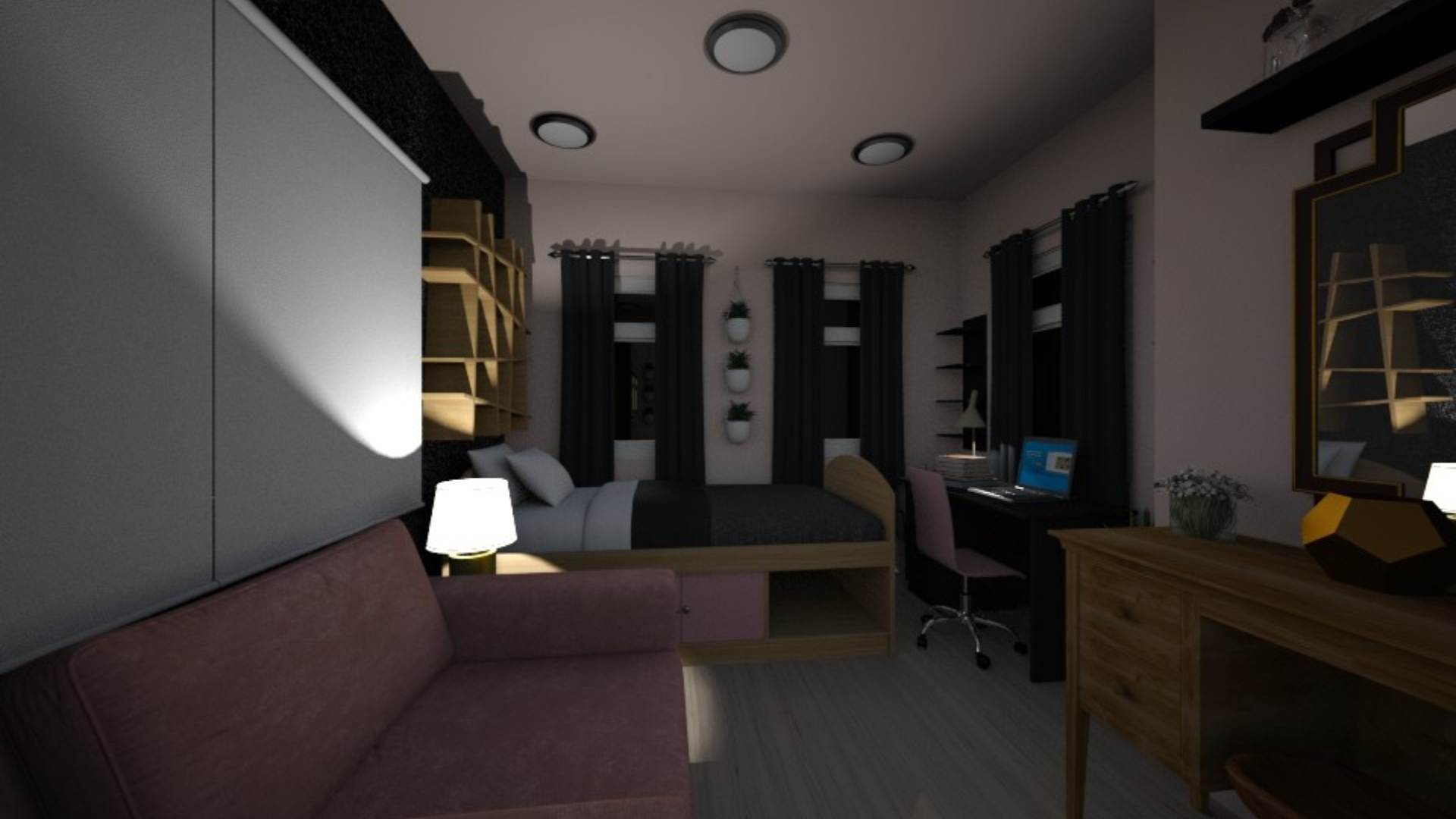
A bedroom that visually signals sleep helps your body transition faster than one still lit and cluttered from the day’s activity.
- Dim the lights throughout your space, including any bright overhead fixtures
- Close the curtains to block outside light from streetlamps or early morning sun
- Fill your bedside water bottle for the night ahead so you’re not fumbling in the dark later
A clean, cool, and low-light environment creates stronger bedtime cues and directly supports the kind of consistent sleep hygiene checklist that sleep researchers consistently recommend across nearly every published guideline on healthy rest.
Reduced light exposure in the evening helps melatonin rise naturally rather than staying artificially suppressed by bright overhead lighting, which research shows can delay the biological signal your body needs to actually start winding down for sleep.
Final 3 Minutes: Relax Your Body

Close the routine with a few calming, physical steps that ease the transition from wakefulness into actual sleep rather than jumping straight from an active day into bed.
- Brush your teeth or complete your skincare routine as a clear physical marker that the day is ending
- Stretch gently for a minute or two to release tension built up from sitting or standing all day
- Turn off the lights and go to bed at your planned time rather than “just finishing one more thing” first
Ending the routine with calming, low-effort activities creates a consistent bridge between an active day and actual rest, reinforcing the same bedtime cue night after night until your body starts anticipating sleep almost automatically once this sequence begins.
How to Customize Your Bedtime Reset
Not every household or schedule looks the same. This checklist flexes depending on what your evening actually involves.
For Busy Professionals
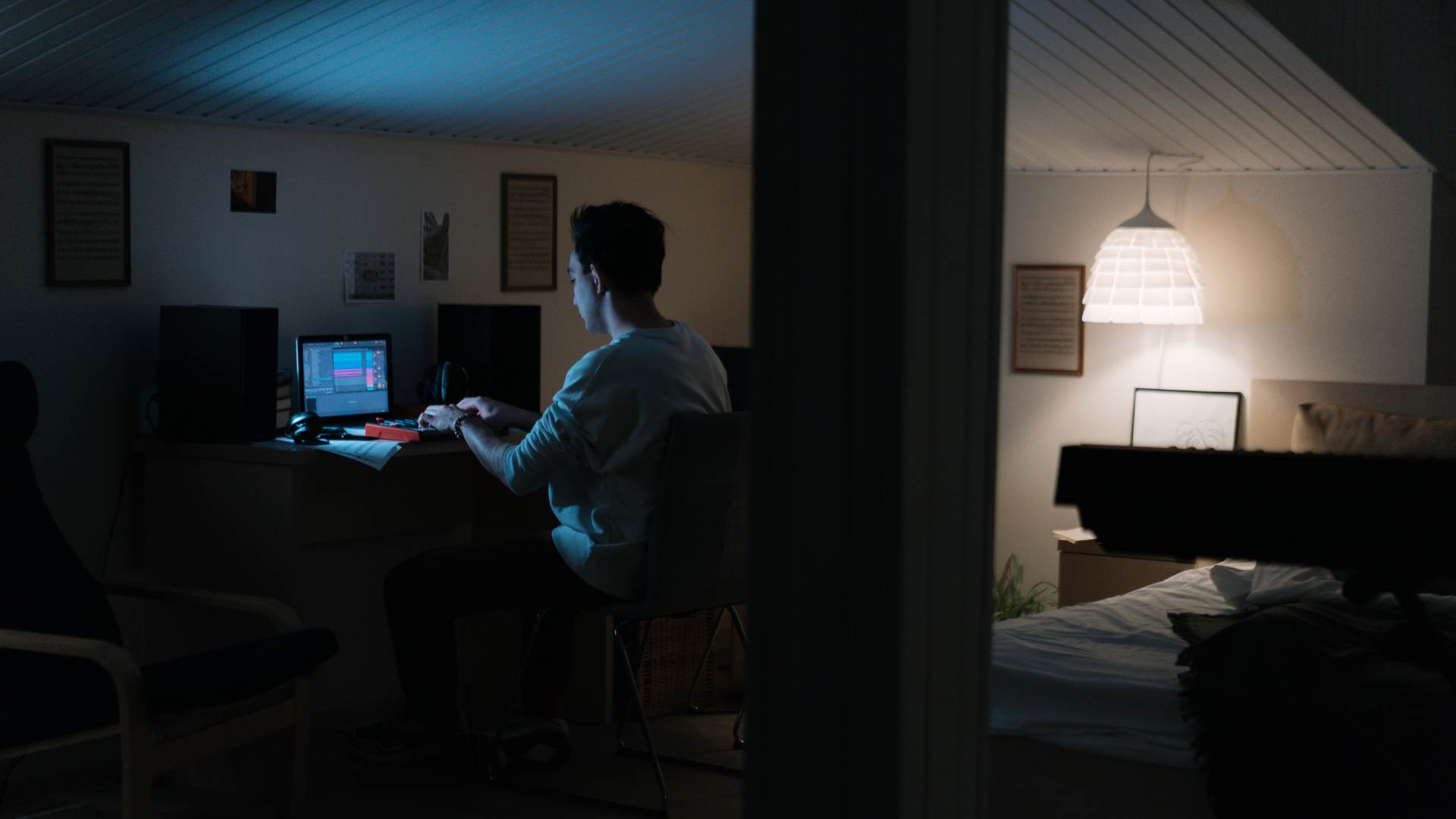
Keep it under five minutes if that’s genuinely all the time you have. Focus mainly on tomorrow’s preparation, since that’s the piece most likely to keep a busy mind racing after the lights go out. Skipping the environmental and physical steps occasionally is far better than skipping the routine entirely.
For Parents

Complete the reset after your children’s bedtime. Use the time to prepare lunches, pack school bags, and lay out anything needed for the morning. This small effort tonight means less rushing and fewer frantic searches for missing shoes tomorrow.
For Students

Organize your study materials and review tomorrow’s class schedule as part of the mental preparation phase. This way, the next morning starts with clarity. You won’t be scrambling to find a textbook or remember which assignment is due.
How a Bedtime Reset Improves Your Morning

Less Decision Fatigue
Every decision made the night before is one less decision competing for mental energy in the morning. Willpower and focus are naturally sharpest early in the day, and that energy shouldn’t be spent choosing an outfit or hunting for keys.
Better Time Management
Knowing what’s packed, planned, and ready removes the scramble that eats into your actual productive time. A chaotic first twenty minutes turns into something closer to a smooth, predictable start.
A Calmer Start to the Day
Waking up to a prepared home feels completely different from starting the day already behind. That calm start tends to carry forward into how the rest of the day feels too.
More Consistent Morning Habits
Morning Routine Ideas for Productivity pairs directly with this checklist. A calm, prepared morning is far easier to build habits around. Even the best intentioned morning routine gets abandoned the moment things already feel behind schedule.
7-Day Bedtime Reset Challenge
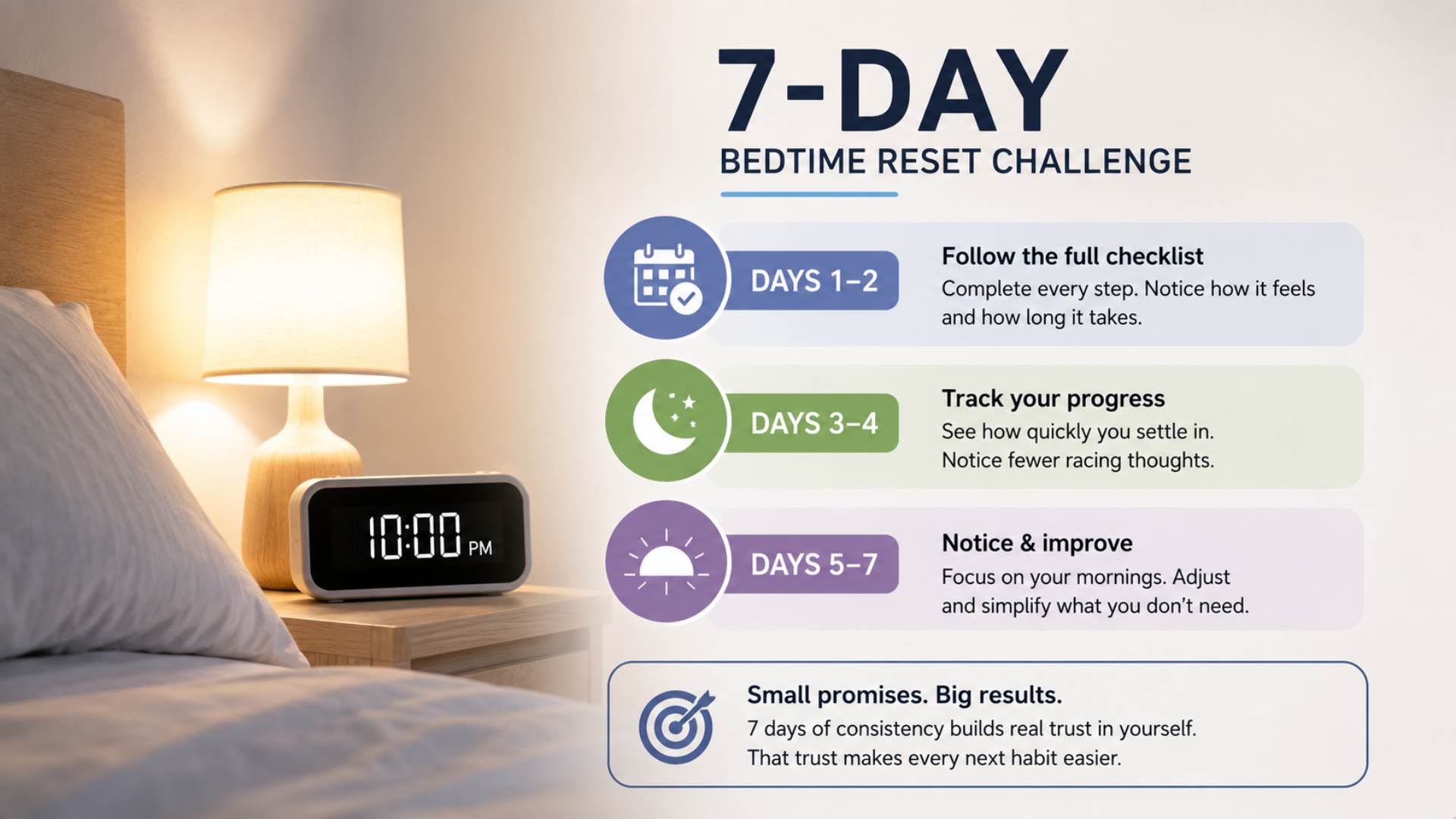
Days 1–2
Complete the full checklist exactly as written. Notice how each phase feels and how long it actually takes for your specific routine. Some people move faster than the suggested timing, and that’s completely fine.
Days 3–4
Track how quickly you settle into bed compared to your usual routine. Pay attention to whether racing thoughts show up less often once tomorrow has already been mentally handled.
Days 5–7
Notice improvements in your morning routine specifically. Review what worked, then simplify further if any step feels unnecessary for your schedule. How Keeping Tiny Promises to Yourself Builds Real Confidence explains why completing this short challenge consistently, even for just seven days, builds real trust in your own follow-through. That trust tends to make the next habit you try to build noticeably easier.
FAQs
How long should a bedtime routine be?
Ten minutes is plenty for most people. Longer routines often become the exact obstacle that causes people to skip the routine entirely on busy or exhausted nights, when a shorter version would have actually gotten done.
Is 10 minutes enough for a bedtime reset?
Yes, especially when the ten minutes is structured into clear phases. A focused ten minutes covering mental, environmental, and physical resets accomplishes more than an unstructured twenty minutes without any real direction.
Should I avoid screens before bed?
Ideally yes, particularly in the hour before sleep. Blue light exposure during this window has been shown across multiple published studies to suppress melatonin and delay sleep onset, even when the content being viewed feels relaxing.
Conclusion – A Few Final Words!
A bedtime reset checklist works because it’s short enough to actually complete every night, yet structured enough to genuinely calm a racing mind and prepare a cluttered space before sleep. The three phases covered here, mental preparation, environmental reset, physical relaxation, take ten minutes total but change how both your night and the following morning unfold. Chaos gets replaced with a small, repeatable sense of control.
Research on blue light, melatonin, and decision fatigue all point in the same direction. Small, consistent evening habits protect both sleep quality and next day clarity far more effectively than an occasional late night effort to catch up on rest after weeks of skipping any wind-down routine at all.
Start tonight with just the first four minutes if that’s all you can manage right now. Build Self Confidence Naturally is worth exploring alongside this checklist, since small, consistent nightly habits like this one build the same kind of self-trust that carries into every other area of daily life.