


The Success Snapshot Habit That Reinforces Positive Progress
Your brain remembers a single criticism far longer than a dozen compliments. That’s not a personal flaw, it’s how human memory evolved to work. The success snapshot habit pushes back against this wiring by asking you to capture one meaningful win each day. Like write one sentence about why it matters, and note one small lesson learned, giving your brain the same kind of attention it automatically gives to setbacks.
This simple daily practice takes less than five minutes, yet it builds a lasting record of progress you’d otherwise forget within days.
Below, you’ll find the full step-by-step method, three ready-to-use templates, and a real breakdown of what actually counts as a win worth recording.
What Is the Success Snapshot Habit?
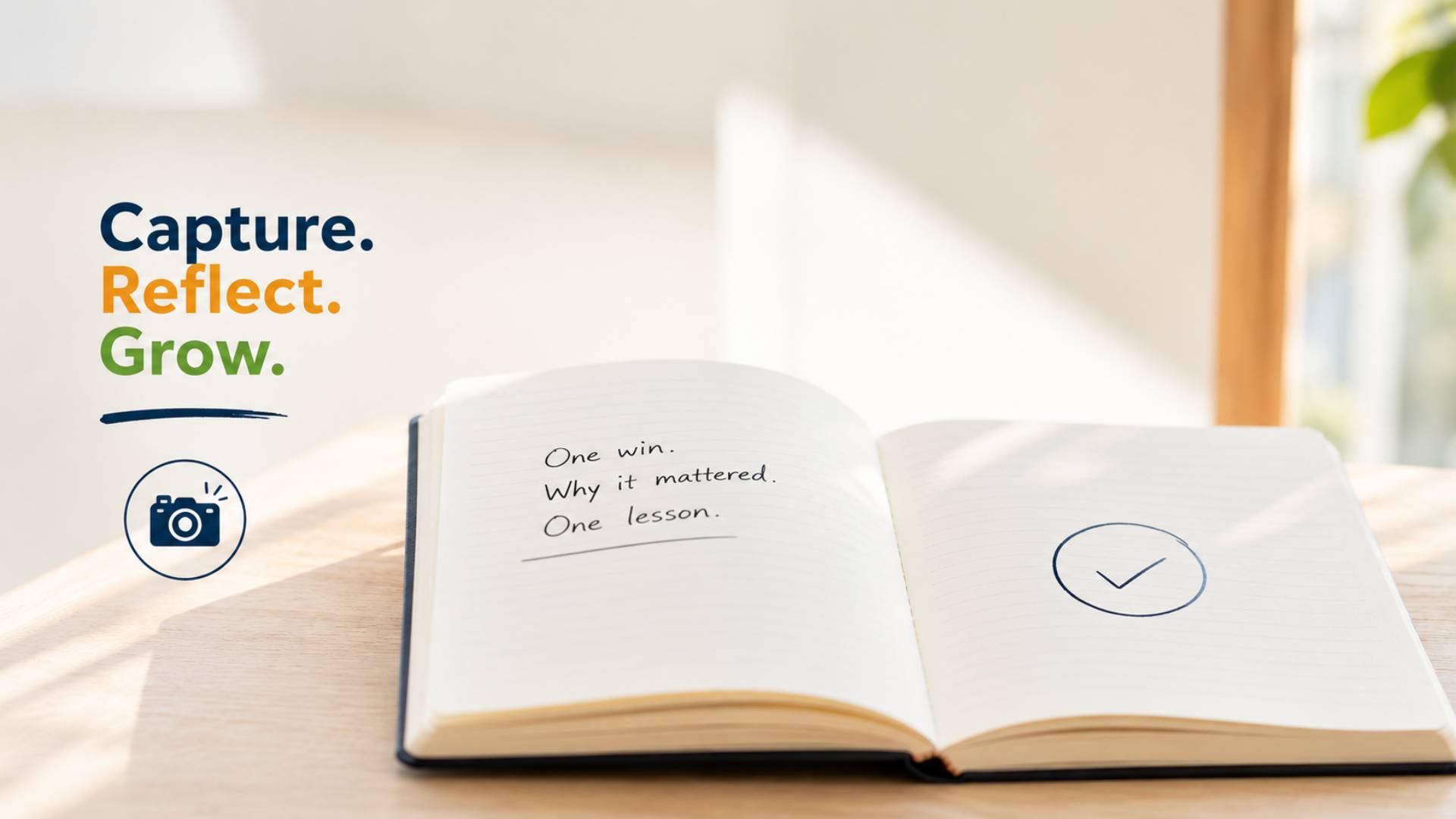
The success snapshot habit is a short daily practice where you write down one specific win, explain briefly why it matters, and note anything you learned from it. Unlike a full journal entry, this takes under five minutes and focuses on a single moment rather than a broad reflection on your entire day.
The goal isn’t to document every accomplishment. It’s to consistently track positive progress that would otherwise slip past unnoticed, turning scattered daily wins into a visible, growing record you can look back on whenever motivation runs low.
Why We Often Overlook Our Progress?

Human memory has a well-documented negativity bias, meaning your brain naturally holds onto criticism, mistakes, and setbacks far more tightly than it holds onto wins. A landmark 2001 review published in the journal Review of General Psychology, titled “Bad Is Stronger Than Good,” found that negative events consistently carry more psychological weight than positive events of equal size across nearly every area of life studied.
This bias isn’t a character flaw. It’s an evolutionary survival mechanism that once helped humans stay alert to real threats. The problem is that this same wiring now causes you to forget a small win within hours while a single piece of criticism can replay in your head for days. The success snapshot habit exists specifically to counter this imbalance.
How to Build Your Success Snapshot Habit

Here’s a simple five-step process you can start using today, regardless of how busy your schedule looks.
Step 1. Choose One Time Each Day
Pick a consistent moment, right after dinner, before bed, or during your evening wind down, when you’ll complete your snapshot. Consistency matters more than the specific time you choose, since a fixed slot removes the need to decide each day whether you’ll actually do it.
Step 2. Capture One Meaningful Win
Write down a single specific moment from your day that felt like progress, however small it seemed at the time. This doesn’t need to be dramatic. A finished task, a hard conversation handled calmly, or simply showing up when you didn’t feel like it all count as legitimate wins worth recording.
Step 3. Add One Sentence About Why It Matters
Explain briefly why this particular moment felt significant to you. This step is what separates a success snapshot from a simple to-do list, since the reasoning behind a win is often what makes it stick in memory longer.
Step 4. Include One Lesson Learned
Note anything you noticed about yourself in that moment, a strategy that worked, a mindset shift, or even just proof that you’re more capable than you assumed. This turns your daily wins into genuine insight you can use again later.
Step 5. Review Your Snapshots Every Week
Set aside a few minutes each week to read back through your recent entries. Why Keeping Tiny Promises to Yourself Builds Real Confidence explains why this kind of consistent review of small, kept commitments builds a form of self-trust that’s difficult to develop any other way.
Success Snapshot Templates
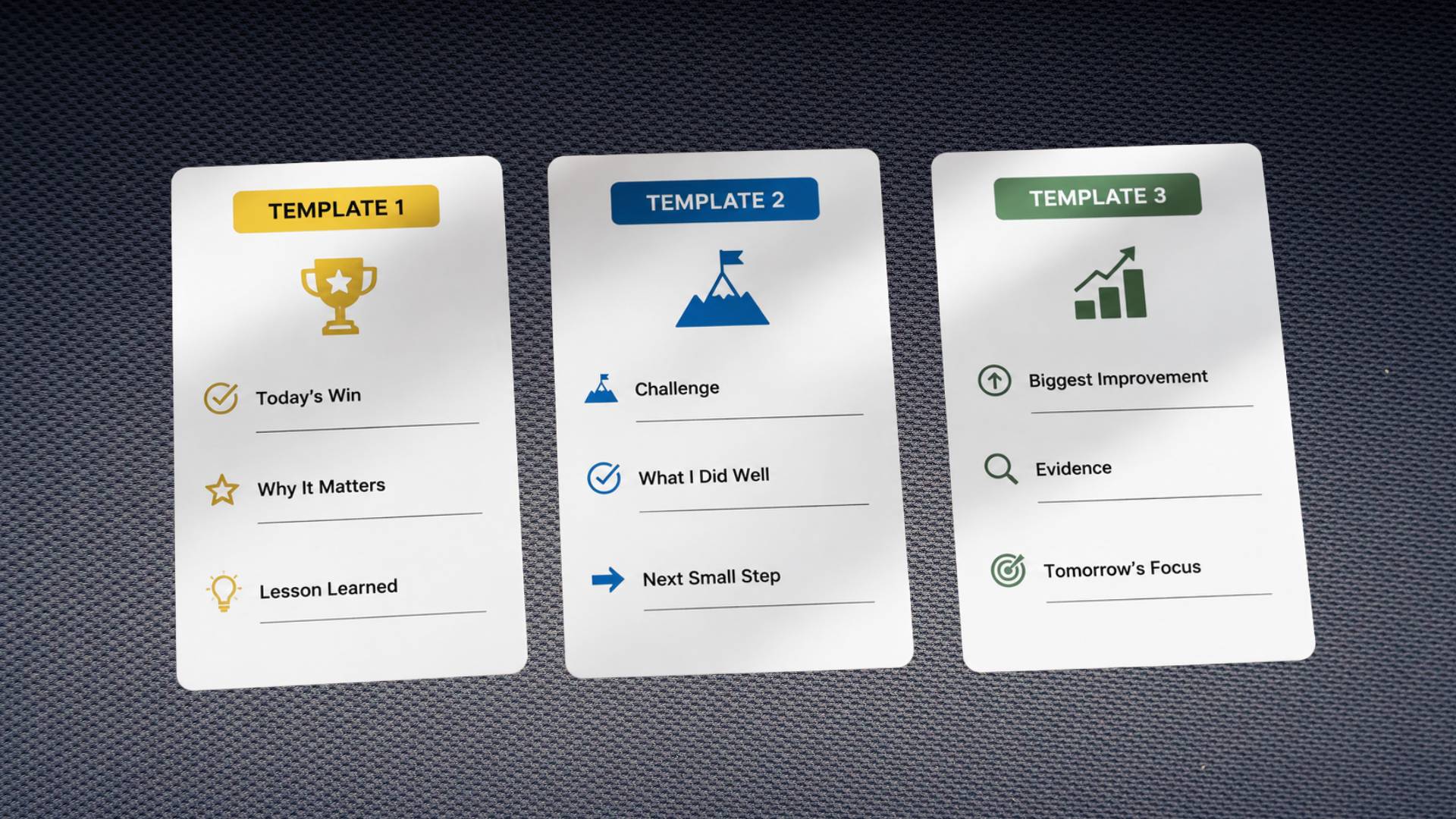
Different days call for different formats. Here are three simple templates you can rotate between depending on what fits your mood or situation.
Template 1
- Today’s Win
- Why It Matters
- Lesson Learned
Template 2
- Challenge
- What I Did Well
- Next Small Step
Template 3
- Biggest Improvement
- Evidence
- Tomorrow’s Focus
The first template works well for a straightforward daily win. The second suits days that felt genuinely difficult, since it reframes a hard day around what you handled well despite the struggle. The third works best for weekly check-ins, when you’re looking at broader progress rather than a single day’s events.
What Counts as a Success Snapshot?
This is where most people get stuck. A success snapshot habit only works if you stop reserving it for major achievements, since most days simply don’t include one. Progress usually looks much smaller and far less dramatic than people expect.
| Situation | Snapshot Example |
| Fitness | Walked despite low motivation |
| Work | Finished proposal early |
| Business | First customer reply |
| Parenting | Stayed patient |
| Relationships | Had honest conversation |
| Mental Health | Managed anxiety today |
| Learning | Learned one new shortcut |
| Money | Didn’t make impulse purchase |
Notice how none of these examples require a major life event. Walking despite low motivation counts just as much as finishing a marathon. Staying patient during a hard parenting moment counts just as much as landing a promotion. The success snapshot habit works precisely because it recognizes effort and small, deliberate choices, not just outcomes that would show up on a resume.
This distinction matters because of how positive experiences get encoded into memory in the first place. Neuropsychologist Rick Hanson’s research on positive neuroplasticity suggests that a positive moment needs sustained attention, often at least ten to twenty seconds, before your brain actually transfers it into longer-term memory.
Negative experiences, by comparison, tend to imprint almost instantly. Writing down a small win and pausing on it for even a few seconds is often what it takes to make that moment actually stick.
Building the Habit Alongside Other Systems
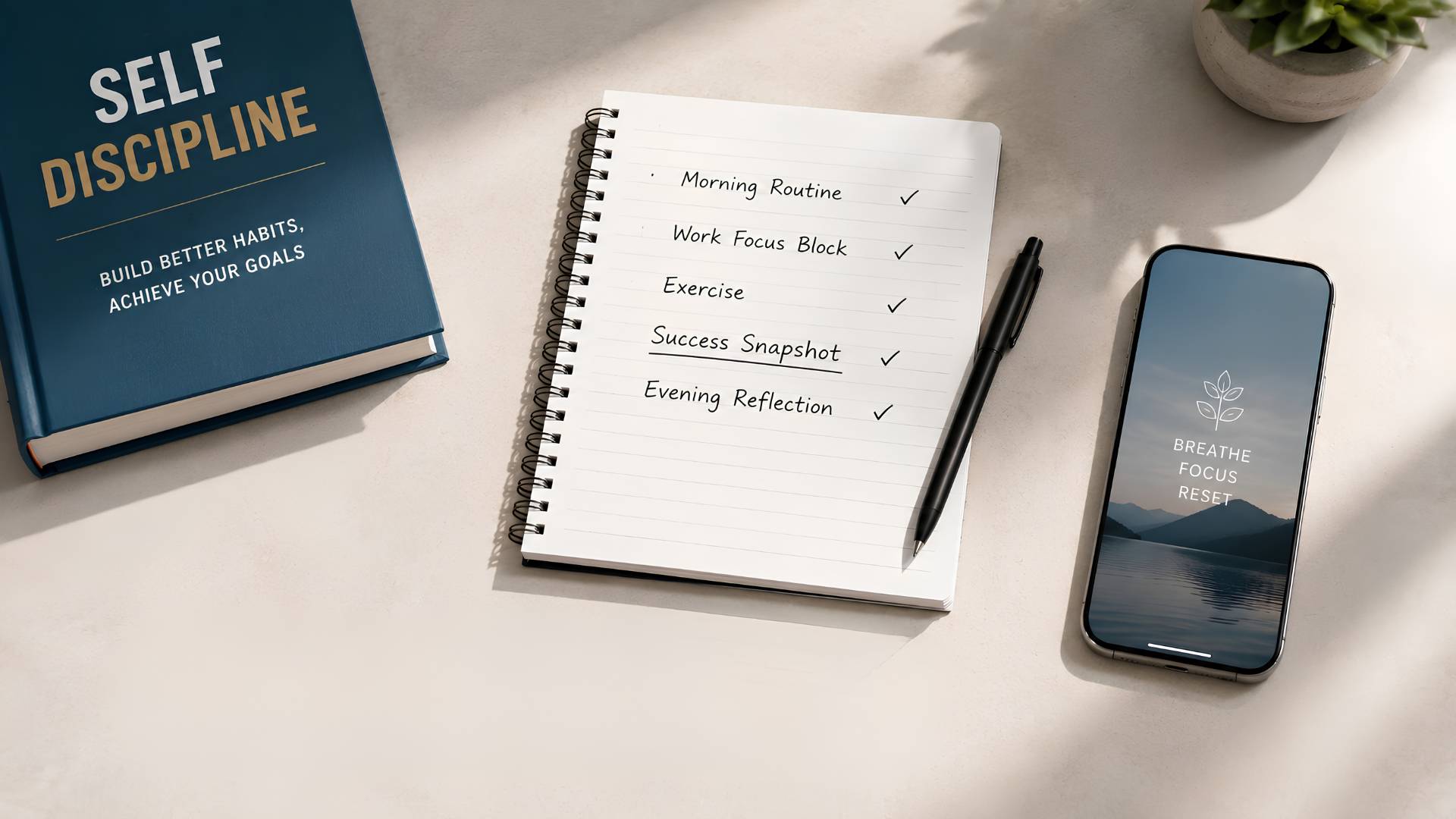
A success snapshot rarely works in isolation. It tends to work best when it’s paired with something you’re already doing. How to Build Self Discipline From Scratch As a Beginner covers how small, structured habits like this one compound over weeks and months, especially when they’re anchored to an existing routine instead of floating on their own.
If your days already feel chaotic or emotionally draining, adding one more task can feel like the last thing you need. How to Improve Mental Wellness Naturally dives deeper into how small, consistent wins like a success snapshot actually reduce mental load over time, rather than adding to it, since the practice takes far less energy than the negativity bias costs you every single day.
Why This Practice Builds Genuine Confidence

Confidence rarely comes from a single big achievement. It builds gradually from a pattern of evidence you’ve collected about yourself over time. A success snapshot habit creates exactly this kind of evidence, one entry at a time, until you have a written record that directly contradicts the negativity bias your brain defaults to naturally.
How to Build Self-Confidence Naturally explores this exact mechanism in more depth, showing how repeated proof of your own follow-through and progress becomes far more convincing than any motivational quote or pep talk ever could. Reading back through weeks of small, specific wins does something that vague self-encouragement simply can’t, it shows you concrete evidence instead of asking you to just believe it.
FAQs
How long should a Success Snapshot take?
Under five minutes is plenty for most people. The goal is consistency, not length, so a short, specific entry works better than a long one you’re tempted to skip.
Can I use my phone instead of a notebook?
Yes, a notes app works just as well as a physical notebook. What matters most is that you actually write the entry somewhere you’ll return to for your weekly review.
How is a Success Snapshot different from habit tracking?
Habit tracking measures whether you completed a specific action, while a success snapshot captures the meaning and emotional weight behind a moment, which makes it a more reflective practice overall.
Wrapping Up…
The success snapshot habit works because it directly counters something your brain does automatically, holding onto setbacks while letting small wins slip away unnoticed. Capturing one meaningful moment each day, along with why it mattered and what you learned, builds a growing record that proves your progress in a way memory alone never will.
Research on negativity bias makes it clear why this practice matters so much. Negative experiences imprint almost instantly, while positive ones need deliberate attention to stick, and a daily success snapshot gives your wins exactly that attention. Over weeks and months, this small habit becomes a genuine record of who you’re becoming.
Start tonight with just one sentence about one small win. How to Build Self Confidence Naturally pairs well with this practice, since the evidence you build here becomes the foundation for trusting yourself more consistently over time.